
If you watch the news for more than ten minutes, it’s easy to believe the world is unraveling. You might feel that you’re already behind. Behind in your career. Behind in your art. Behind in becoming the person you thought you’d be by now.
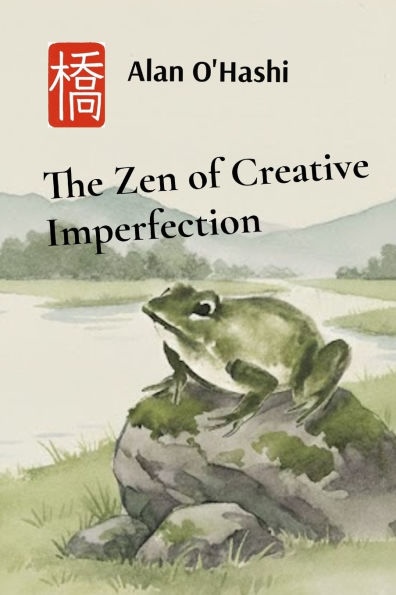
I wrote a book, “The Zen of Creative Imperfection.” Zen offers a different starting point. Zen doesn’t ask us to stop striving. It asks us to stop strangling ourselves with the idea of perfection while we strive.
Creative imperfection is a point of entry. One of the quiet gifts of Zen thinking is the idea of showing up fully without clinging to outcomes.
In creative work, this means writing the imperfect draft. It involves painting the awkward first layer and launching the idea before it feels bulletproof.
In the workplace, that might mean, rather than staying home when you’re sick, you come in because you think others will respect you more.
Perfection is rigid. Zen is fluid.
When we let go of the need for everything to be finished, stress loosens its grip before it’s shared. We release the urge to have things polished and approved. We no longer create to avoid failure, but use failures to explore. Ironically, this is often when our best work appears.
Climbing to the top requires managing tension, balance, and breath. It also needs the willingness to take the next step without knowing the entire path.
Imperfection makes you stronger by teaching you resilience. Each misstep becomes information, not indictment or punishment. When we internalize this, creative stress transforms into creative energy. We no longer ask, “Is this good enough? and start asking, “What does this want to become next?”
Progress That Calms the Mind
Kaizen is a continuous, incremental improvement that relieves the pressure of getting it “right” all at once. Instead of demanding a masterpiece, kaizen asks for a one-percent improvement today. Then another tomorrow.
Perfection shouts. Kaizen whispers.
In creative practice, kaizen might look like:
- Writing 300 honest words instead of waiting for the perfect chapter.
- Practicing one difficult passage instead of the whole piece.
In the workplace, the kaizen approach might be:
- Learning what your customers think, rather than coming up with a solution first.
- Incrementally completing a project instead of falling behind on the assignment.
Kaizen soothes the nervous system by giving us permission to move forward without self-judgment. Over time, those small improvements compound into mastery without burnout.
Becoming Whole-Brain Thinkers
As we move into 2026 and beyond, the world is asking more of us. We’re navigating rapid technological change, cultural complexity, and a nation that will become majority-minority by 2045. That reality calls for thinkers who are analytical and intuitive, structured and empathetic.
Zen doesn’t favor the left brain or the right brain. It integrates them.
Creativity without discipline drifts. Discipline without creativity freezes. The future belongs to people who can analyze data. They must also read a room. These people build systems and tell stories. They innovate without losing their humanity.
Creative imperfection allows that integration. It keeps us curious rather than defensive, adaptive rather than brittle.
The Calm Path Upward
Zen redefines success so it doesn’t cost us our peace.
You can still aim high.
You can still climb.
You can still want more.
You don’t have to punish yourself on the way up.
Creative imperfection is guided by Zen and softened by kaizen. It reminds us that growth doesn’t have to be violent to be powerful. Sometimes the strongest progress happens quietly, one imperfect step at a time.
That, paradoxically, is how we become our best.


Discover more from Best Chance Media
Subscribe to get the latest posts sent to your email.


Leave a comment