

Alan and Boulder Community Media (BCM) collaborate with community-based media producers and organizations to develop their stories in a culturally competent manner. Their work captures the nuances of self-identity and expands the wider community’s understanding of our pluralistic world.
Alan creates important, meaningful, entertaining, and inspiring films and books.
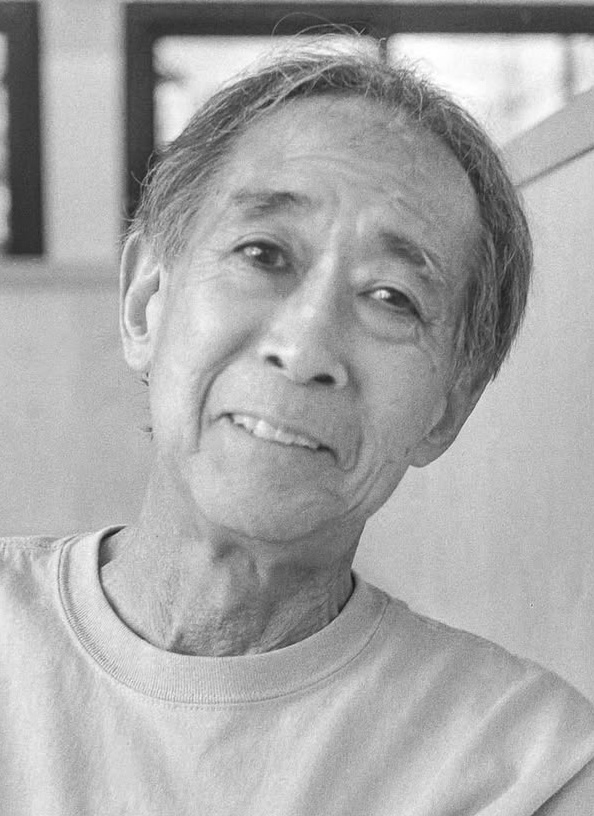
He wants audiences to experience the world from multiple angles, challenge their assumptions through stories, and gain a deeper understanding of their own self-identities and those different from theirs.
Alan’s writing and movie-making explore the complexities of identity through his personal experiences with other people.
His work explores the intersections of race, ethnicity, culture, nationality, and gender, and how these facets of identity shape our lives.
If you have questions about Alan’s creative motivations, or anything else, click and chat with Alan Bot!
Check out Alan’s Books

A Frequent Floater’s Handbook: Plan for calm seas, navigate the squalls (2024). You’ve probably heard of Frequent Flyers who like to travel from place to place by airplane. Becoming a Frequent Floater on cruise ships is one of the most exciting and stress-free ways to travel if you know what to expect. The Frequent Floater’s Handbook is the ultimate planning guide for enjoying and making the most of your voyage, whether you’re a first-time cruiser or a seasoned traveler looking to fine-tune your experience. This book covers everything from picking the right cruise line and cabin to navigating embarkation, onboard dining, entertainment, and shore excursions. Learn how to avoid common pitfalls, maximize savings, and make informed decisions about gratuities, Wi-Fi, and hidden fees. Discover insider tips on casino gaming (or avoiding it), smoking areas, accessibility accommodations, and what happens behind the scenes on a modern cruise ship. You’ll also explore cruising’s pop culture presence from The Titanic to The Love Boat, and get practical advice on disembarking with ease and planning your next adventure. Packed with practical insights, real-life examples, and must-know strategies, A Frequent Floater’s Handbook ensures a smooth voyage from start to finish. Whether setting sail for the first time or already a frequent floater, this handbook will have you cruising like a pro. Buy Now or Buy a Personalized Copy!
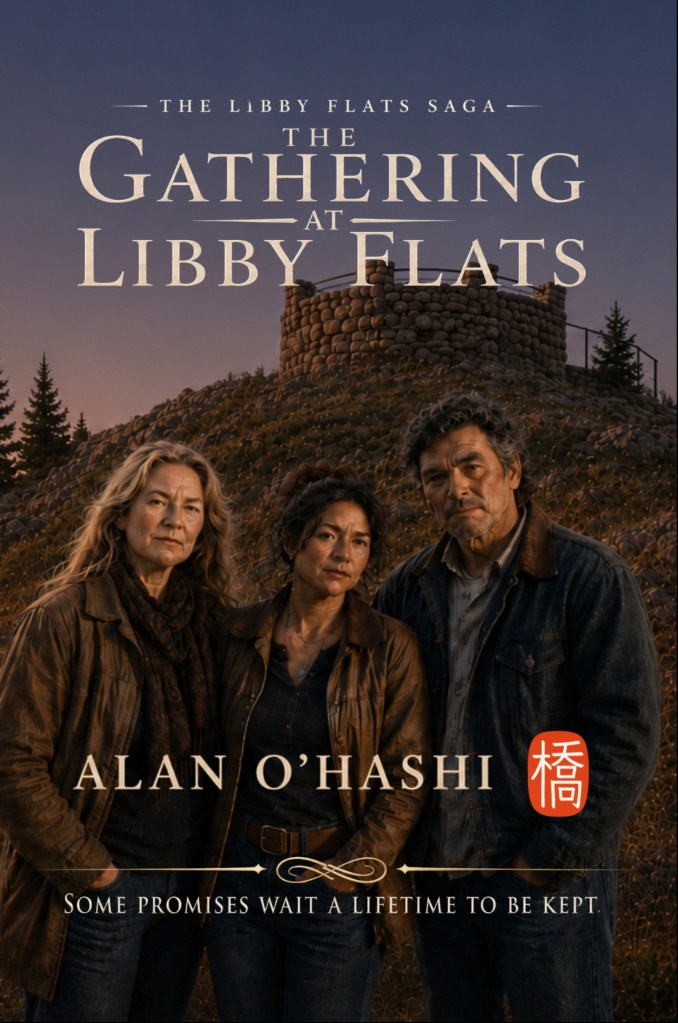
The Gathering at Libby Flats: The longest journeys lead back to yourself (2024). The story follows Elizabeth Steiner on a 2006 road trip from New Orleans to Boulder to reconcile with her dying mother, Becca. At Becca’s funeral, Elizabeth realizes she must resolve the differences between her father, Gary, and his estranged university friends, Jack and Avery, as they reunite after 38 years to fulfill a long-forgotten pact. This coming-of-age story explores themes of love, identity, rebellion, and the enduring power of friendship as the characters navigate their shared history and rediscover old bonds. Buy Now or Buy a Personalized Copy
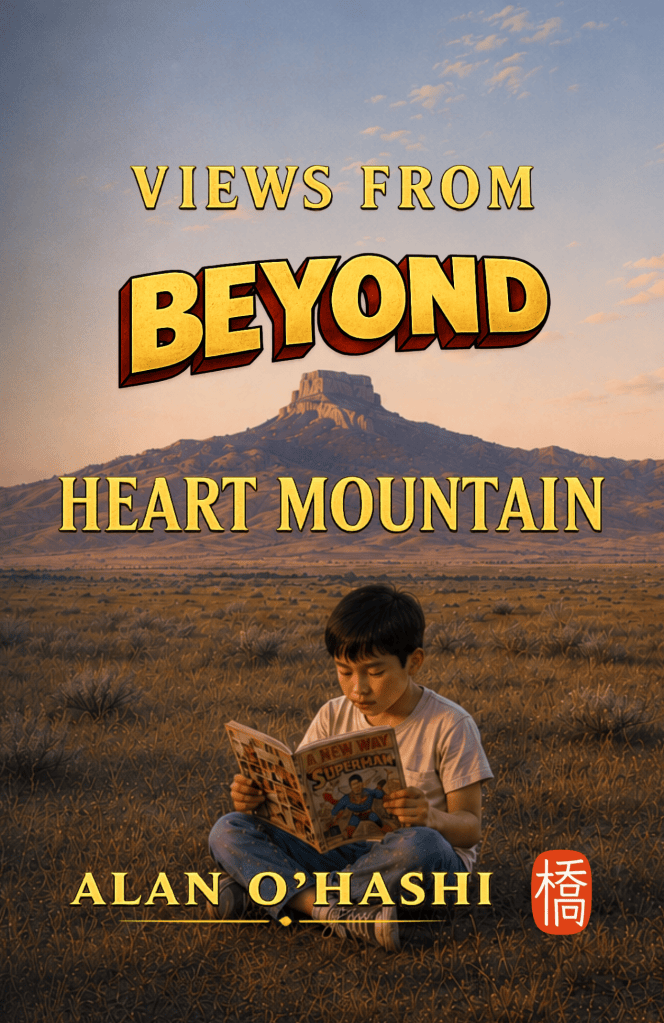
Views from Beyond Heart Mountain: Reimagine the American Way and learn ways to bridge multicultural divides in an ever-changing world (2026). This memoir is set in the once-vibrant Japanese neighborhood on the 500 and 400 blocks of West 17th Street in Downtown Cheyenne, Wyoming. Alan and his family lived in the middle of nowhere in Wyoming and avoided the War Relocation Camp experience. They still had to deal with overt and subtle racism during and after World War II. Through the eyes of his hero, Superman, Alan learned to be civil and developed practical cultural competency techniques from growing up in a strong extended family, living in a college dorm, purchasing his first home as a co-op, and living in a mixed-use urban neighborhood before it became trendy. Buy Now or Buy a Personalized Copy!

My Chat with GPT: My Chat with GPT: An Artificial Intelligence Handbook for Cyber Citizens (2023). The handbook is based on a personal conversation I had with ChatGPT about the intersection of computer programming and the human environment. If you’re dabbling in the Artificial Intelligence (AI) world but don’t know much about how it works, other than prompting GPT and asking for responses to questions. Then this book is for you. It gives insights from GPT itself about the benefits and liabilities. Buy Now or Buy a Personalized Copy!
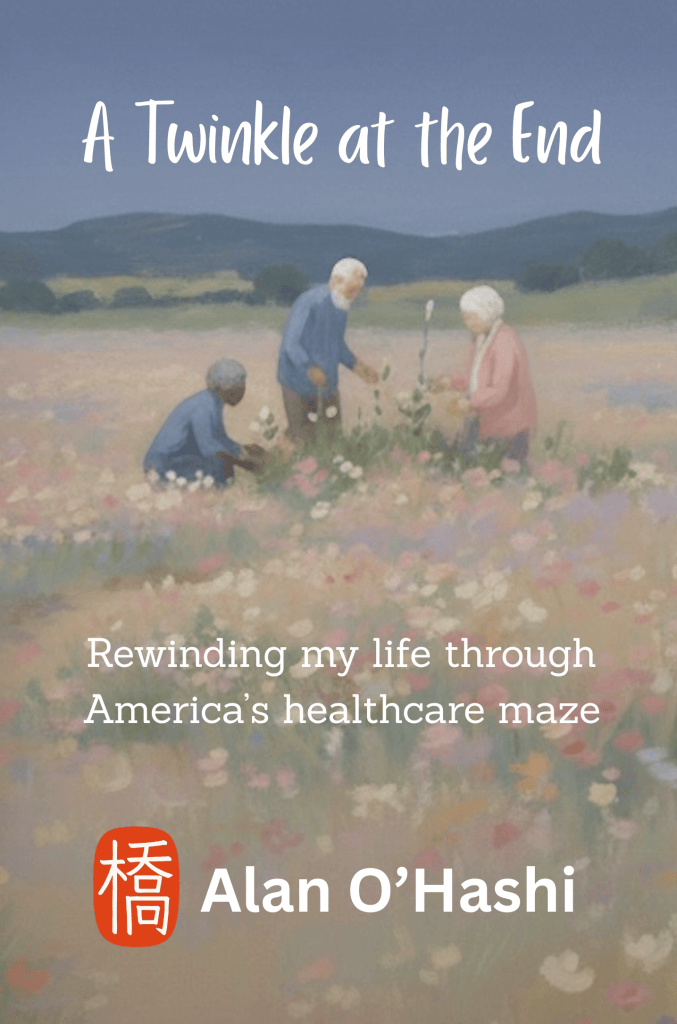
A Twinkle at the End: Rewinding My Life Through America’s Healthcare Maze (2nd printing 2025). This is the story of the author’s life, spanning seven decades, but imagined as if he had lived it in reverse. This story follows his life as if he died old, is reborn, and then transfigured to age in reverse. Public and private healthcare providers aim to keep people alive and free from disease, but they must also generate profits and sustain themselves. Nonprofit organizations can generate revenue, but are prohibited from distributing dividends to their owners and stockholders. Buy Now or Buy a Personalized Copy!
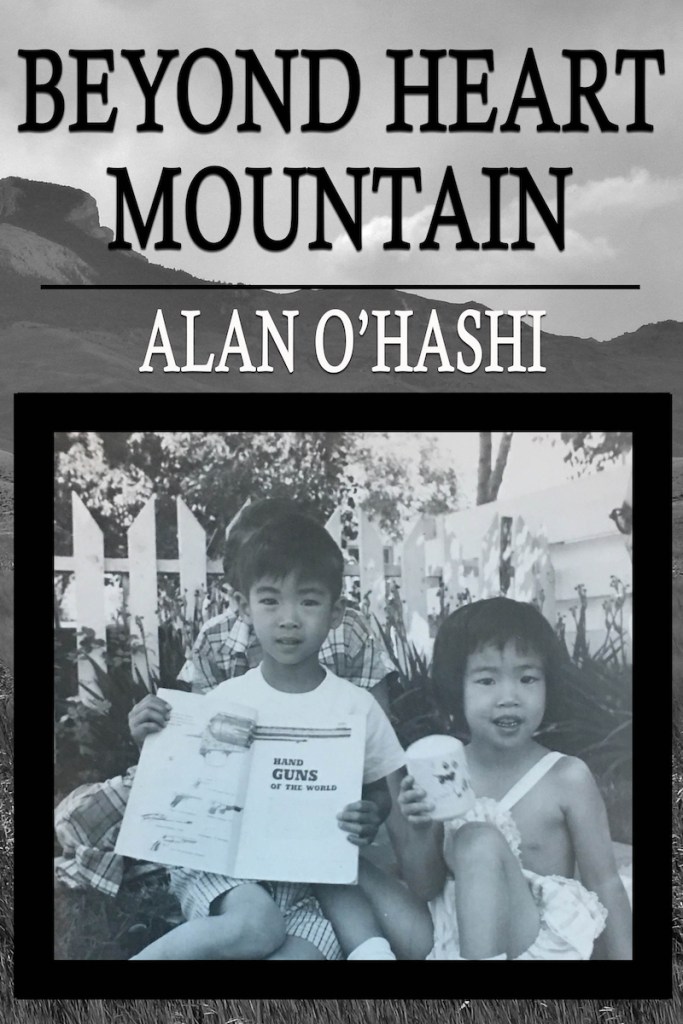
Beyond Heart Mountain (2022). During World War II, Cheyenne native Alan O’Hashi and his family avoided life in internment camps such as Heart Mountain. Alan now documents the overt and quiet racism pervasive there and throughout the United States and relates his experiences to current struggles and the issue of civility within society. Buy Now or Buy a Signed Copy
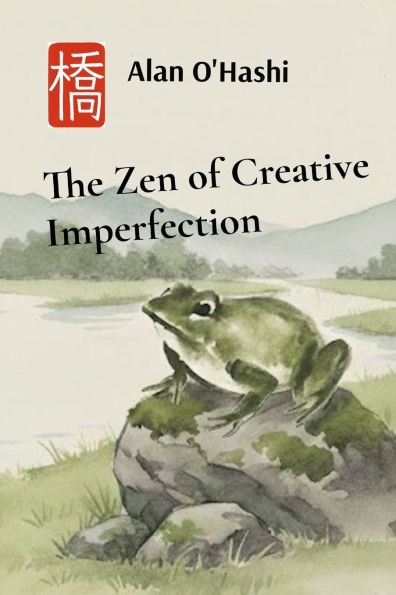
The Zen of Creative Imperfection: Own your life, overcome self-doubt, and finish your creative projects (2025). Author Alan O’Hashi is walking proof that perfection and organization are highly overrated. His parents and grandparents were all artists and took a Zen approach to nurturing their work, which influenced me as a creative entrepreneur. Rather than rigid plans and goals, they were contemplative and relied more on intuition, accepting life as it happened without judgment. He recounts how his life lessons influenced his first book pitch, which he based on a typed-up piece of paper in June. He signed a contract and finished an 80,000-word manuscript five months later. Buy Now or Buy a Personalized Copy!
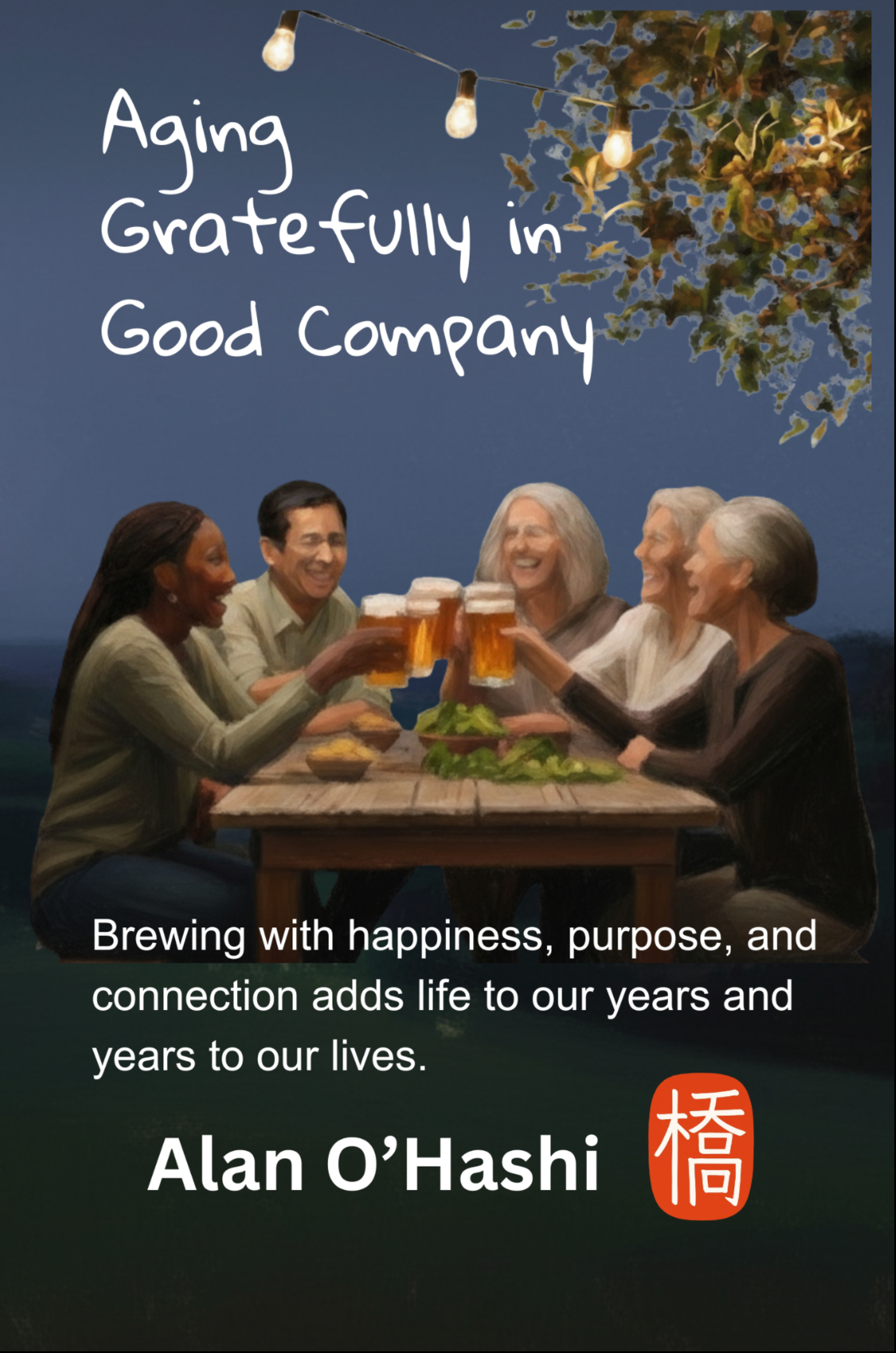
Aging Gratefully in Good Company: Brewing with happiness, purpose, and connection adds life to our years and years to our lives. (2025). This book provides “nuts-and-bolts” methods on how your community can utilize cultural competence techniques to better encourage members to understand one another. What if cohousers organized themselves and collectively undertook a mission to save the world? True Stories explores why cohousing can evolve from a social movement into a social norm. The book offers a paradigm shift about how cohousing can bridge socio-economic divides. Buy Now or Buy a Personalized Copy!
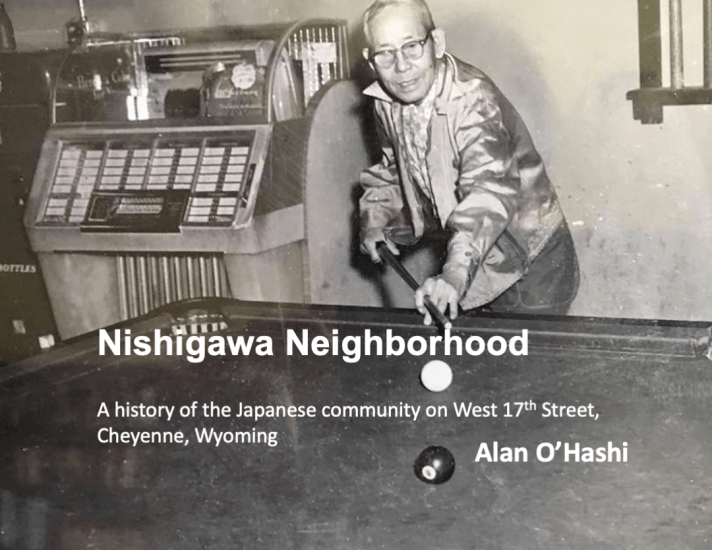
Nishigawa Neighborhood: A coffee table book history of the Japanese community in Cheyenne, Wyoming (2021). This self-published, 11 x 8.5-inch hardcover coffee table book features over 100 color and black-and-white images of the Japanese community on the 400 and 500 blocks of West 17th Street in Cheyenne, Wyoming. Watch the preview of the first nine pages. You’ll receive an autographed copy. If you would like a specific inscription, please provide it. We’ll send the item via USPS in a corrugated cardboard package. Buy a Signed Copy
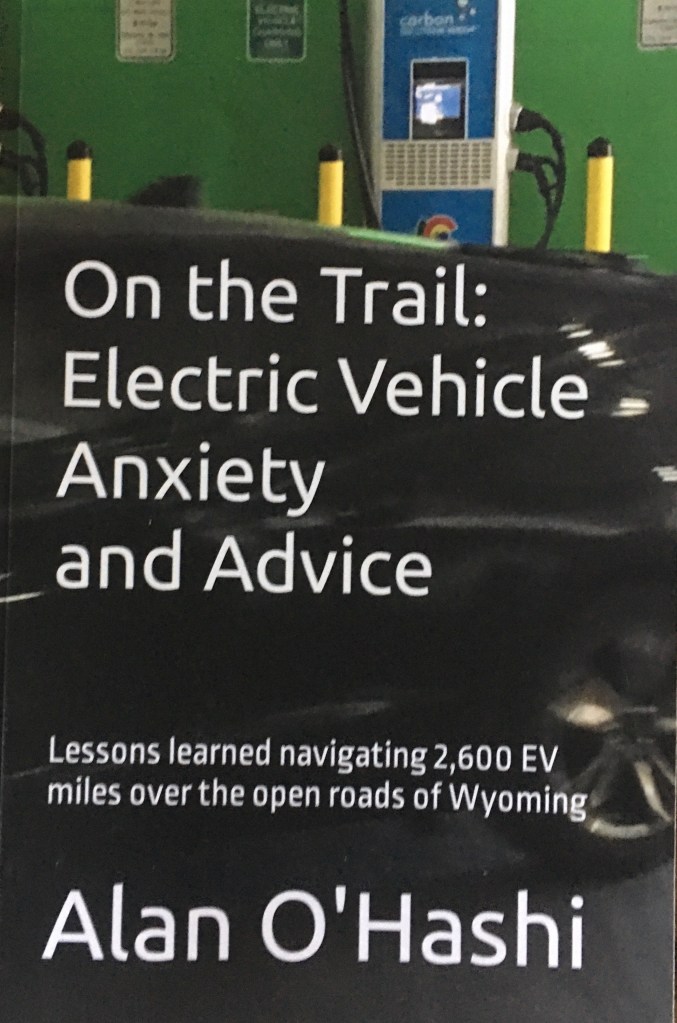
On the Trail: Electric Vehicle Anxiety and Advice: Lessons learned navigating 2,600 EV miles over the open roads of Wyoming (2021). This memoir recounts author Alan O’Hashi’s experiences trekking thousands of miles around Wyoming in an electric vehicle (EV). If you’re curious about EVs, he explains the different kinds of EVs on the market. Still, more about EV charging station subtleties like suggested locations for the three types of chargers, general details about battery efficiency, and the pitfalls drivers may encounter on short trips around town and longer drives over, say, 60 miles. Buy a Signed Copy
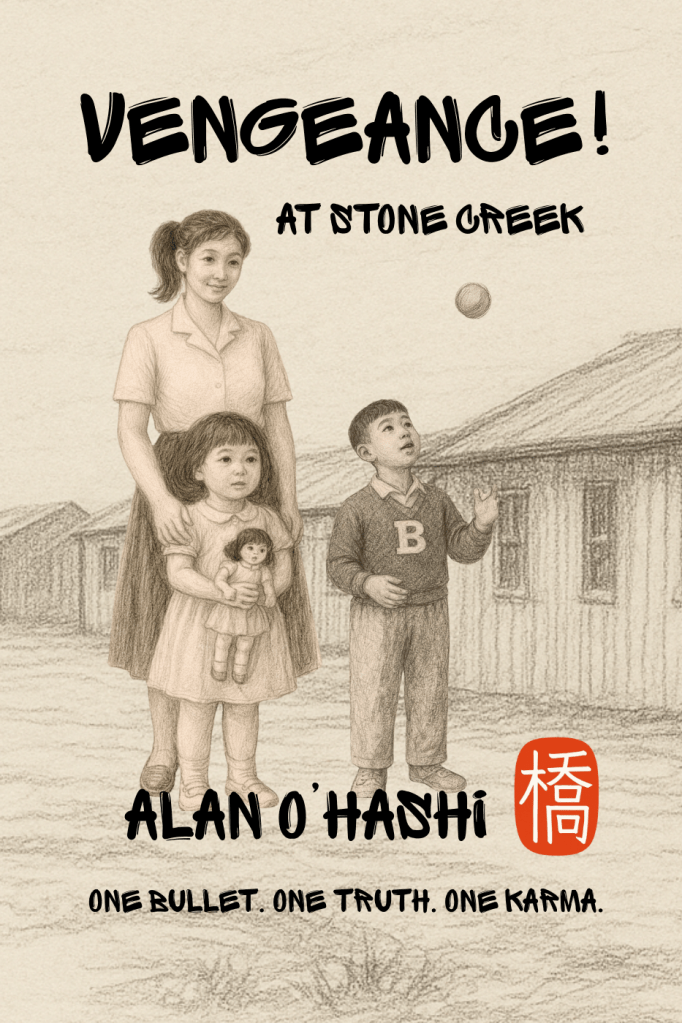
Vengeance! at Stone Creek: One Bullet. One Truth. One Karma. Alan O’Hashi’s second historical fiction novel is a haunting, intimate reckoning with memory, injustice, and survival. When an aging man returns to the place where his childhood was forever altered, buried truths begin to surface—about family, loyalty, and the quiet violence of being erased by history. Set against the long shadow of wartime incarceration, the novel follows a life shaped by loss and restraint, where grief hardens into resolve and patience becomes its own form of resistance. What begins as reflection slowly tightens into a moral question: when justice is denied for decades, what does vengeance really mean—and who ultimately pays its price? Both spare and deeply human, Vengeance at Stone Creek explores how communities endure, how memory refuses to remain buried, and how the past patiently waits for reckoning. It is a story about survival without sentimentality, anger without spectacle, and the fragile line between remembrance and retribution. Buy Now or Buy a Personalized Copy!

What the Morning Brings: A different ring. A deadlier bull. The same shared silence. Mornings don’t ask who you were yesterday. They don’t care what you meant to do, what you almost said, or how close you came to getting it right. Morning shows up, steady and indifferent, and waits to see what you’ll do with it. That’s where this story begins. It’s fitting that the book released in July. Ernest Hemingway’s birthday is July 22nd, a deliberate nod to the writer who understood that what’s unsaid matters most. What the Morning Brings reimagines Hemingway’s The Sun Also Rises, moving it to a different setting amid a different war and personal unrest. Instead of drifting through the street cafés of Paris in the 1920s, in the aftermath of World War I, it’s hiding from the riot police at a pizza bar on University Hill in Boulder, in the immediacy of the Vietnam War in 1968. When Jake Barnes, Brett Ashley, and Robert Cohn leave Boulder, they don’t head for Pamplona for a ritualized spectacle in a bullring. They head to Cheyenne for a rodeo where a bull-riding chute replaces the arena, and the question is whether you can hold on when there’s nothing stable underneath you. The bones of Hemingway’s original story are still there: restlessness, longing, and the search for meaning from the atrocities of war. If you know The Sun Also Rises, you’ll recognize the shape. If you don’t, it won’t matter because What the Morning Brings is not a literal imitation, but translates time, place, and what it means to wake up in a world that’s changed and realize you still have to decide who you’re going to be in it. If you’re drawn to stories that trust you to sit in the tension, that say more by saying less, and that understand how much can hinge on a single morning, this one’s worth your attention. I’ll share more as July 22nd draws closer. Until then, pay attention to the mornings. Buy Now or Buy a Personalized Copy!
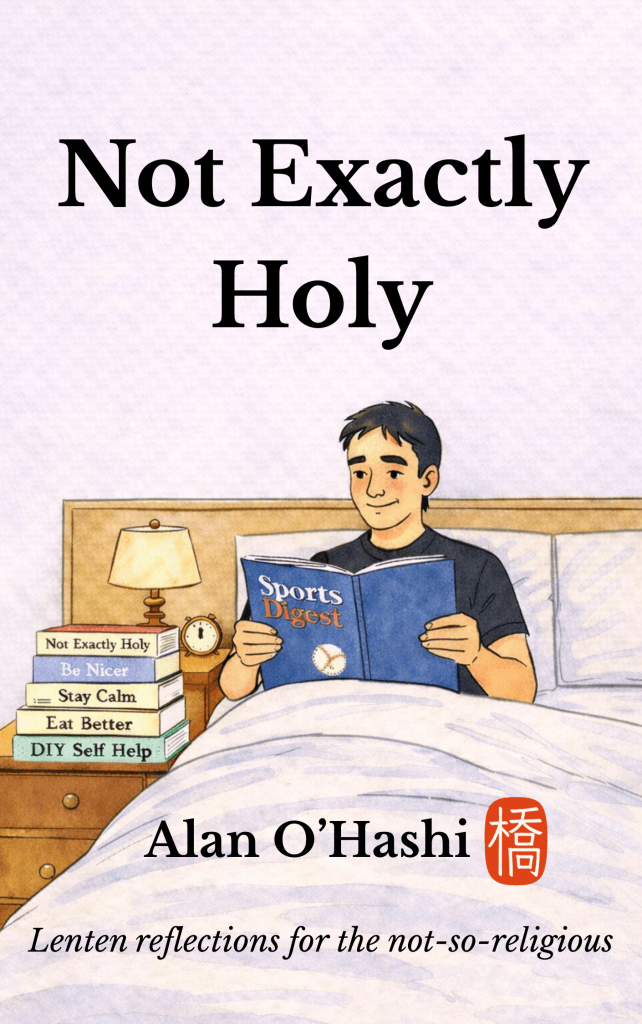
Not Exactly Holy: Lenten reflections for the not-so-religious. Spring has a way of arriving without asking permission. One week, everything feels stalled out: gray, brittle, going nowhere, and the next, something green is pushing through the cracks like it’s been waiting there the whole time. It doesn’t check whether you’re ready. It doesn’t wait for perfect conditions. It just begins again. Renewal doesn’t need ideal timing, especially this time of year, when the calendar leans into reflection and reset, whether we’re paying attention or not. Which is what led me, somewhat unexpectedly, to start writing a book with 40 daily Lenten reflections, Not Exactly Holy: Lenten Reflections for the Not-So-Religious. Not the polished, certain kind or the ones that assume you’ve got a rhythm, a routine, or a clear sense of belief, but something a little more grounded and honest about how most of us actually move through seasons like this, starting with good intentions, losing focus, circling back, wondering what any of it is supposed to mean. That’s where this project took shape and drops on Black Friday 2026. I’ve decided the liturgical calendar works better as a suggestion than a rule.
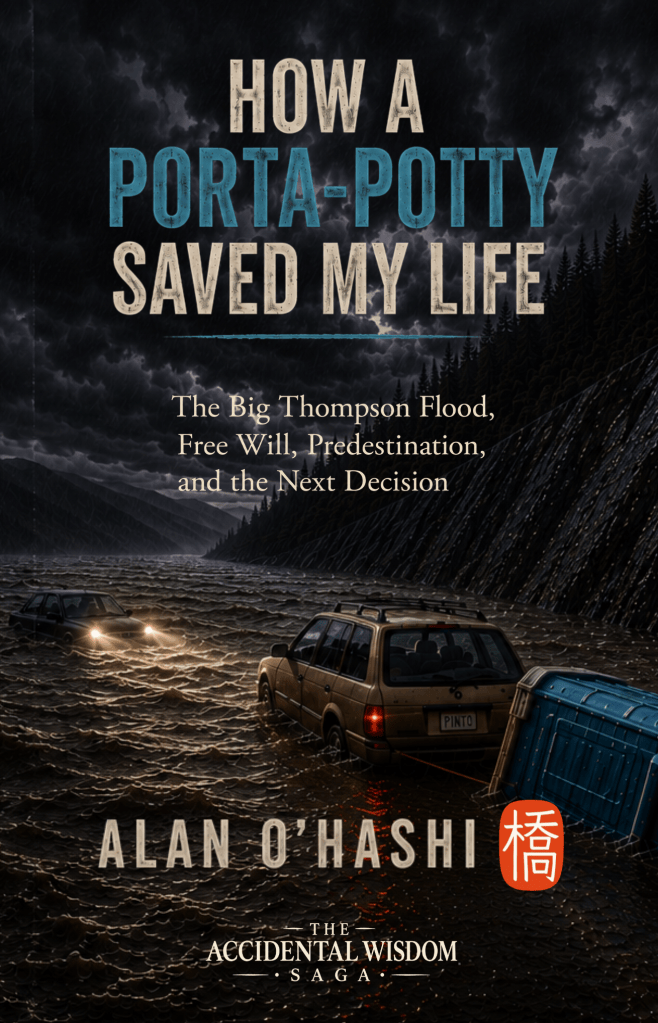
How a Porta-Potty Saved My Life: The Big Thompson Flood, Predestination, Free Will, and the Next Choice. Alan O’Hashi thought he’d have a leisurely drive to work at Rocky Mountain National Park. He had no idea he would drive into history based on free will, predestination, and an aqua-blue portable toilet. On the evening of July 31, 1976, 23-year-old O’Hashi left Cheyenne, Wyoming, and headed west toward Rocky Mountain National Park, where he worked as a seasonal ranger. A Colorado State Patrol officer warned him about bad water ahead and told him to turn around at Drake. Alan kept driving. Within minutes, a shallow trickle crossing U.S. Highway 34 became a deadly current. His pea-green Ford Pinto station wagon struck a 55-gallon barrel and stalled. He watched another car and its occupants disappear into the darkness. He climbed through the driver’s-side window and waded for higher ground. Then an aqua-blue portable toilet caught his bumper and steered his car away from the river.
