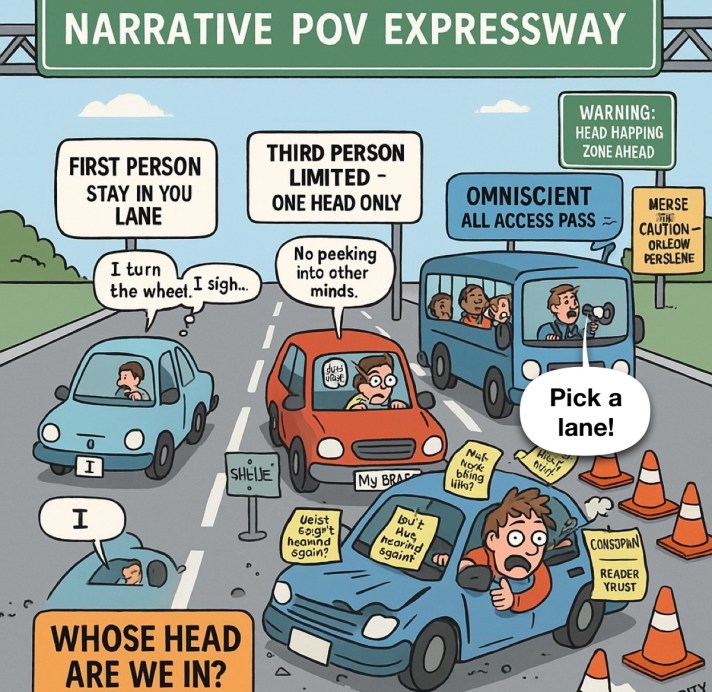
You’re not in their head, but you’re definitely looking over their shoulder.
By Jennifer Braddock – Editor
If First Person POV is “I saw the ghost,” Omniscient is “Everyone saw the ghost.” They all had strong opinions about it. Third-Person Limited is “She saw the ghost,” and regretted reading the Latin inscription aloud.
This point of view allows you to explore one character’s experience deeply. You don’t need to commit to writing as if you are them. It’s flexible, intimate, and very popular in modern fiction, especially YA, thrillers, and literary fiction.
Definition:
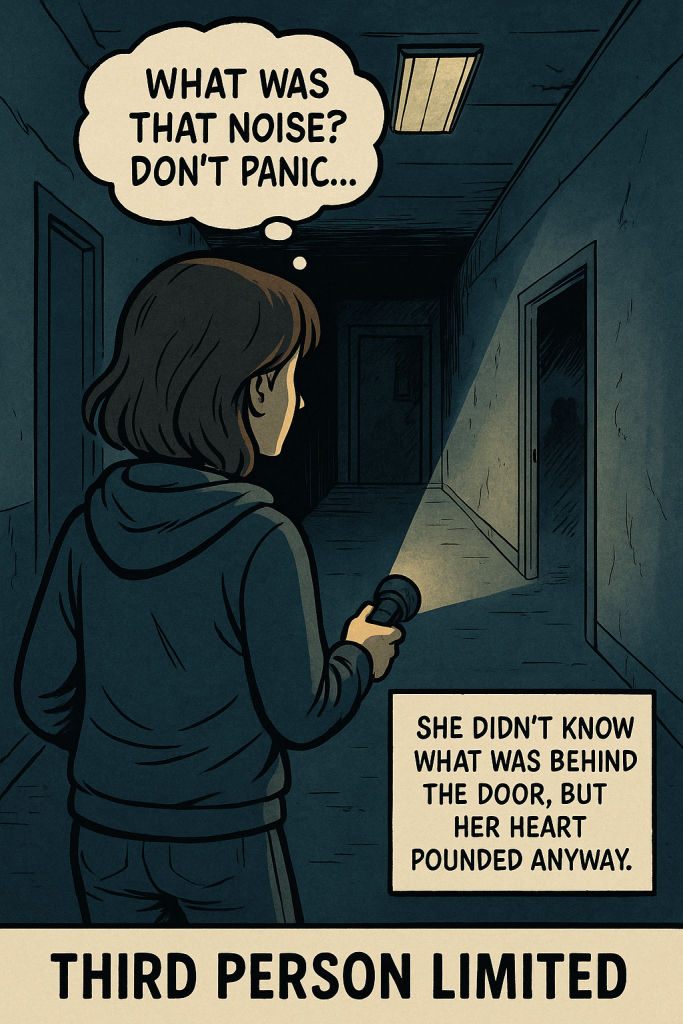
Third Person Limited tells the story from an outside narrator’s perspective. It uses third-person pronouns (he, she, they). However, it is limited to the thoughts, perceptions, and knowledge of one character at a time. You’re the camera, but the lens is glued to their shoulder. The POV is best for:
- Character-driven stories
- Genre fiction (fantasy, romance, mystery)
- Readers who want emotional immersion without full-on “I” narration
What Makes It Work:
- Focused insight into a single character’s thoughts and feelings.
- Suspense through selective revelation. Readers only know what the character knows.
- Empathy without total immersion. You can still write in your voice while exploring theirs.
- Flexibility to shift to other characters in different chapters or scenes. You must stay consistent within a scene.
Golden Rule of Limited:
Stick with your character’s brain. No head-hopping allowed. If you’re in Olivia’s POV, you can’t say what Jack is thinking. You can only state what Olivia guesses he’s thinking. She might be wrong, and that can be fun to play with.
- Bad: Jack looked angry. He wanted to tell her everything, but couldn’t. (How would Olivia know that?)
- Better: Jack looked angry. Olivia wondered if he wanted to tell her something, but his jaw stayed tight. (Much better, we’re in her head, not his.) Internal thoughts are often italicized or made clear with free indirect style: Why was he lying? He didn’t even flinch.
Already writing in First Person and want more flexibility? Third Person Limited lets you but zoom out just enough to expand the world a little. It’s like switching from GoPro to a handheld Digital Single Lens Reflex camera.
Next time, we’ll get godlike with Third Person Omniscient. We will explore what happens when the narrator knows everything. This includes the stuff the characters don’t want revealed.

Do you have questions or comments? Ask Besty Bot about the writing craft and how to publish your book with Best Chance Media!
Copy and Share This Post on Your Social Media:
🧠 Third Person Limited = in their mind, not in their mouth. A great POV when you want depth without diary entries. #POVWriting #WritersCommunity #ThirdPersonLimited https://bestchancemedia.org/2026/01/29/mastering-third-person-limited-pov-in-fiction/