Stop Waiting for Perfection: Embrace Messiness

By Jennifer Braddock, Editor

Rooted in Zen principles, yet crafted for modern lives, the book invites readers to loosen their grip on flawless outcomes.
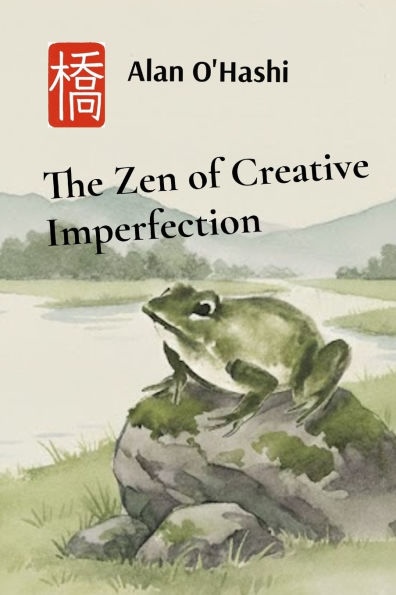
It encourages rediscovering the value of process, presence, and incremental growth. It’s a book about creativity and also about sanity.

This book doesn’t ask readers to overhaul their lives all at once. It asks them to make small, intentional shifts. There’s a practice known as kaizen, which is continuous improvement without self-judgment. The Zen of Creative Imperfection speaks to that moment with clarity and calm.

If my keyboard charged me a dollar every time I backspaced, I could’ve funded my own book tour by now. I’ve rewritten this sentence nine times already.

Guess what? It’s still not perfect, but here it is. I hit “submit” anyway.

It’s the beginning of a new year, and what can you do to keep on your writing journey? Did you put off your creative projects because you were too busy?

You might think your first draft should read like a Pulitzer winner. I get it. We want to be the genius who shows brilliance from the start. It’s like Mozart composing symphonies without a single missed note.

We’re not Mozart. We’re more like that raccoon with the cotton candy. He tried to wash it and watched it dissolve in sad confusion. That’s our writing process when perfection gets in the way.

The pursuit of perfection is a fancy form of fear. Fear of judgment. Fear of being “found out.” Fear that if you reveal your typos, rough metaphors, and imperfect logic, people will see who you really are.

Spoiler alert: they already do.

Your obsession with perfection isn’t making your work better. It’s making it slower. That sparkling first sentence? It can’t carry the whole novel. That brilliant first paragraph? It will get cut in draft three anyway. Meanwhile, the story that wants to be told is stuck in limbo while you try to polish your outline’s fingernails.

What Zen Says: Zen doesn’t care about your perfect first draft.

Zen says: “Before enlightenment, harvest rice, carry water. After enlightenment, harvest rice, carry water.”
Translation for writers: Before writing a bestseller, write messy. After your best seller, still write messy.

Perfection is an illusion. Imperfection is reality. Zen embraces impermanence, the incomplete, the irregular. Ever seen a raked Zen garden? It’s full of swirls and randomness. That’s your draft.

Doubt is natural. Perfection is optional. Progress is sacred.

There’s no need to sit in silence on a mountain top: What if your writing isn’t perfect? Neither are your socks, and you still wear those. Let go of perfection. Let go of doubt.

Adopt a little Zen and just keep writing. Finish the page. Finish the chapter. Finish the dang thing. Then bow to your draft and whisper:

“Thank you for being gloriously, usefully, and beautifully imperfect.”

Do you have questions or comments? Ask Besty Bot about the writing craft and how to publish your book with Best Chance Media!

Copy and Paste This Post on Your Social Media:

Zen says, “Let go.” Your inner critic says, Rewrite that sentence for the 19th time.” Guess who’s slowing you down? Perfectionism is just fear in a fancy outfit. Want to actually finish your book? Embrace the mess. Your first draft isn’t meant to be perfect—it’s meant to exist. 🧘‍♀️ Breathe. Write. Let go. #WritingCommunity #AmWriting #FirstDrafts #Perfectionism #WritersLife #ZenWriting #CreativeProcess #LetItBeMessy #WriteAnyway #FinishTheBook https://bestchancemedia.org/2026/01/01/perfection-slows-you-down-and-everyone-knows-youre-not-perfect-anyway/


← Back

Thank you for your response. ✨

Finding Balance: Zen and Creativity for Success

If you watch the news for more than ten minutes, it’s easy to believe the world is unraveling. You might feel that you’re already behind. Behind in your career. Behind in your art. Behind in becoming the person you thought you’d be by now.

I wrote a book, “The Zen of Creative Imperfection.Zen offers a different starting point. Zen doesn’t ask us to stop striving. It asks us to stop strangling ourselves with the idea of perfection while we strive.

Creative imperfection is a point of entry. One of the quiet gifts of Zen thinking is the idea of showing up fully without clinging to outcomes.

In creative work, this means writing the imperfect draft. It involves painting the awkward first layer and launching the idea before it feels bulletproof.

In the workplace, that might mean, rather than staying home when you’re sick, you come in because you think others will respect you more.

Perfection is rigid. Zen is fluid.

When we let go of the need for everything to be finished, stress loosens its grip before it’s shared. We release the urge to have things polished and approved. We no longer create to avoid failure, but use failures to explore. Ironically, this is often when our best work appears.

Climbing to the top requires managing tension, balance, and breath. It also needs the willingness to take the next step without knowing the entire path.

Imperfection makes you stronger by teaching you resilience. Each misstep becomes information, not indictment or punishment. When we internalize this, creative stress transforms into creative energy. We no longer ask, “Is this good enough? and start asking, “What does this want to become next?

Progress That Calms the Mind

Kaizen is a continuous, incremental improvement that relieves the pressure of getting it “right” all at once. Instead of demanding a masterpiece, kaizen asks for a one-percent improvement today. Then another tomorrow.

Perfection shouts. Kaizen whispers.

In creative practice, kaizen might look like:

  • Writing 300 honest words instead of waiting for the perfect chapter.
  • Practicing one difficult passage instead of the whole piece.

In the workplace, the kaizen approach might be:

  • Learning what your customers think, rather than coming up with a solution first.
  • Incrementally completing a project instead of falling behind on the assignment.

Kaizen soothes the nervous system by giving us permission to move forward without self-judgment. Over time, those small improvements compound into mastery without burnout.

Becoming Whole-Brain Thinkers

As we move into 2026 and beyond, the world is asking more of us. We’re navigating rapid technological change, cultural complexity, and a nation that will become majority-minority by 2045. That reality calls for thinkers who are analytical and intuitive, structured and empathetic.

Zen doesn’t favor the left brain or the right brain. It integrates them.

Creativity without discipline drifts. Discipline without creativity freezes. The future belongs to people who can analyze data. They must also read a room. These people build systems and tell stories. They innovate without losing their humanity.

Creative imperfection allows that integration. It keeps us curious rather than defensive, adaptive rather than brittle.

The Calm Path Upward

Zen redefines success so it doesn’t cost us our peace.

You can still aim high.
You can still climb.
You can still want more.

You don’t have to punish yourself on the way up.

Creative imperfection is guided by Zen and softened by kaizen. It reminds us that growth doesn’t have to be violent to be powerful. Sometimes the strongest progress happens quietly, one imperfect step at a time.

That, paradoxically, is how we become our best.

Leave a comment

← Back

Thank you for your response. ✨