Show, Don’t Tell: Unlocking Emotional Depth

By Jennifer Braddock – Editor

You’ve probably heard the advice “show, don’t tell” tossed around in every writing workshop, critique group, or how-to book. If you’re a newer writer, that phrase can feel like a riddle.

  • What does it really mean?
  • They sound like the same thing!
  • When is telling actually okay?

Let’s break it down.


What is “Telling”?

Telling is the act of summarizing a scene, emotion, or action. It’s straightforward and often quick. Think of it like giving the audience a news report.

Telling example:

Maria was nervous about the audition. She didn’t think she was good enough.

The reader gets the information, but there’s no emotional immersion. You’re told what Maria feels, but you don’t feel it alongside her.


What is “Showing”?

Showing brings the reader into the scene with sensory details, action, dialogue, and subtext. It lets readers experience the story.

Showing example:

Brenda clutched the script so tightly her knuckles turned white. She mouthed the lines again, her voice barely a whisper. When the casting assistant called her name, her feet stayed rooted to the floor for half a beat longer than necessary.

You aren’t told she’s nervous, you see it in her actions. Showing invites the reader to infer emotion and meaning through behavior and atmosphere.


So… Is Telling Bad?

No! Telling has its place, especially when you need to move through time quickly, summarize minor events, or create narrative distance. It becomes a problem when it replaces emotional depth or undermines key moments.

Here’s the trick:
Use telling for transitions. Use showing for transformation.


Blending the Two

Good storytelling is a balance of showing and telling. Imagine your manuscript like a film. You don’t need to zoom in on every moment in high-def slow motion. When your character’s heart is breaking, let us feel it. When the villain turns, show us the glint in their eye. When your protagonist is growing, show us the stretch marks of that change.


Let’s Compare – A Scene, Told and Shown

Told:

Jesse was heartbroken when Elena left him. He missed her terribly.

Shown:

Jesse stood in the darkened kitchen, the coffee pot still half-full from the morning she left. He picked up her favorite mug and ran his thumb along the chip at the rim. The silence in the apartment buzzed louder than the refrigerator.

The first version is faster, but emotionally distant. The second immerses you in Jesse’s world. It lets you feel the weight of his grief without ever using the word “heartbroken.”


Your Turn – Take Action

The next time you revise a scene, ask yourself:

  • Am I showing emotion, or just labeling it?
  • Can I replace a summary sentence with a sensory detail, action, or snippet of dialogue?
  • Where does telling help with pacing, and where does it steal emotional resonance?

Writing isn’t about choosing one over the other. It’s about mastering both.

Your challenge:
Take one paragraph from your current draft. Identify where you’re telling. Then rewrite it to show. Feel the difference. See how your story comes alive.

You’ve got this. Your readers don’t want to be told how your character feels, they want to feel it with them.


Final Word

Showing is where your story breathes. Telling is how it moves. Together, they give your narrative rhythm, shape, and soul. Mastering the difference is what turns decent prose into unforgettable fiction.

Now go show us something we can’t forget.

Do you have questions or comments? Ask Besty Bot about the writing craft and how to publish your book with Best Chance Media!

Show, don’t tell” is great advice—but what does it really mean? And when is telling okay? Learn how to balance both, with examples and a challenge to improve your next scene.

https://bestchancemedia.org/2025/02/12/show-dont-tell-unlocking-emotional-depth/
#ShowDontTell #WritingTips #AmWriting #WritersLife

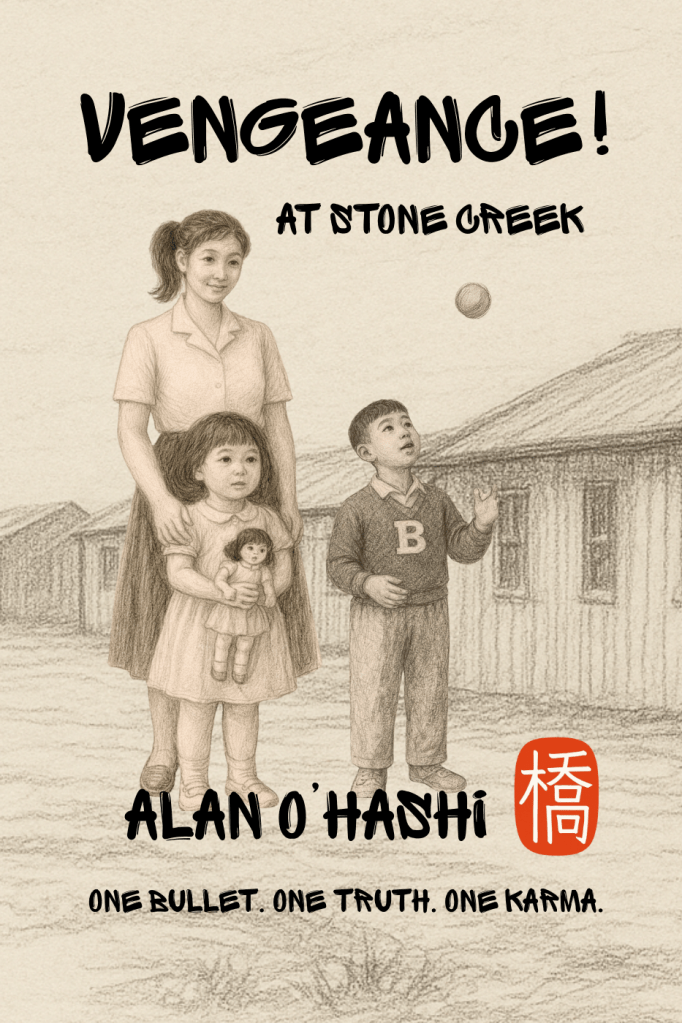
Vengeance! at Stone Creek: A Novel of Injustice

Some novels entertain. Some educate. A rare few refuse to let the reader off the hook.

Vengeance! at Stone Creek is one of those books.

Set in the long shadow of World War II–era Japanese incarceration, the novel explores what happens after injustice has been legalized and filed away.

Rather than retelling history, it integrates unanswered questions and the uncomfortable truth, deferring accountability indefinitely.

Alan O’Hashi writes with restraint and precision. The tension comes from moral pressure and the question history prefers not to ask: What is owed when the harm was sanctioned by law?

When a soldier fires his rifle from a guard tower inside Camp Arroyo, a Japanese American incarceration camp near Stone Creek, Colorado, the sound echoes far beyond the barbed wire. 

What happens next is buried under military procedure, fear, and silence. Official reports flatten the truth. Witnesses are discouraged from speaking. Inside the Camp, grief is expected to be swallowed quietly.

Tak Fujiyama is a child when the shots are fired, but the moment marks him for life. Incarcerated alongside his family without trial, Tak learns early that innocence offers no protection and that the law does not always serve justice.

As the War grinds forward, Camp Arroyo becomes its own harsh world of dust storms, guard towers, loyalty questionnaires, and the daily humiliation of being labeled an enemy by the country of his birth. The violence at Stone Creek is never properly addressed, and Tak is left to grow up carrying an unanswered wound.

After the War ends, America moves on quickly.

The WRA dismantled the camps, archived files, and released families with bus tickets. Tak learns that forgetting is the price of belonging. He builds a life beyond the Camp, but memory proves stubborn. The injustice refuses to fade, shaping his relationships, his sense of self, and his understanding of right and wrong.

Years later, unanswered questions draw Tak back to Stone Creek. His past resurfaces through testimony, suppressed records, and the memories of those who survived the Camp’s violence. Tak confronts what was taken from him and others and reckons with a difficult truth. Vengeance feels like the only remaining form of balance.

Vengeance! at Stone Creek is a powerful work of historical fiction that explores the lasting psychological and moral consequences of wartime incarceration. Through Tak’s journey, the novel examines loyalty under pressure, the burden placed on survivors to remain silent, and the generational cost of unresolved trauma. My story illuminates a rarely told chapter of American history, where citizenship failed to protect and the rule of law bent under fear and prejudice.

At its heart, this is a book about memory, who controls it, who benefits from forgetting, and what happens when those harmed refuse to let the truth disappear. Vengeance! at Stone Creek asks hard questions about accountability and justice, and about what remains when a nation chooses expedience. It is a sobering, deeply human novel about the price of silence and the long shadow cast by injustice.

This novel is for readers who loved Snow Falling on Cedars, No-No Boy, or There There, but it stands firmly on its own. It’s spare, deliberate, and quietly furious. The kind of book that sparks hand-selling conversations. The kind readers come back to talk about.

Why indie bookstores should carry it:

Because this is exactly the kind of book your customers expect from you. The stories they won’t discover through algorithms or celebrity lists. This story rewards thoughtful readers by inviting dialogue.

Vengeance! at Stone Creek is available this February. Recommend it. Put it in the hands of readers who want comfort and the truth. Order from Ingram iPage, 979-8-9894213-1-2, Retail Price $19.95 USD.

← Back

Thank you for your response. ✨

How to Safeguard Your Manuscript from Theft

By Jennifer Braddock – Editor

Every new writer has that one fear: What if someone steals my story? You’ve poured your soul into your manuscript.

The idea of someone swiping it and cashing in is the stuff of literary nightmares.

Take a breath. The good news? You have more protections than you think, and they’re easier to access than you realize.

Ways Writers Can Protect Their Work:

  • Copyright Automatically Applies: The moment you put your story into a fixed form, like typing it in a document, saved in the cloud, or printed out, it’s automatically protected by copyright law. You own it, even if you haven’t registered it.
  • Register with the U.S. Copyright Office: While copyright is automatic, registration adds teeth. It gives you the right to sue for statutory damages and attorney’s fees if someone actually does steal your work. It’s cheap insurance, about $45 to $65 to register online at copyright.gov.
  • Keep Good Records
    Save dated drafts, emails to critique partners, and notes to yourself. Metadata and timestamps can be useful evidence of originality and creation dates.
  • Use Trusted Sharing Platforms
    If you’re sharing with beta readers or critique groups, choose platforms with built-in version tracking. Google Docs or Dropbox are good options. If you’re really concerned, ask your readers to sign a simple non-disclosure agreement (NDA). This isn’t common in most writing circles.

Myths to Avoid:

  • Poor Person’s Copyright: Mailing your manuscript to yourself is outdated and largely useless in court.
  • Someone Will Steal It Just Because You Shared It: In reality, theft of unpublished stories is incredibly rare. It’s good to have confidence that you have a great story. Most professionals have enough ideas and are too busy creating their own work to bother with stealing yours.
  • Your story deserves to be heard and not hoarded: Equip yourself with the facts, take a few simple steps, and then speak up boldly. After all, the bigger risk isn’t theft, it’s never letting anyone read your work at all out of fear.

Your Call to Action:

Ready to protect your writing and publish with confidence? Share this post with your writing group and check out our guide to registering your first copyright step-by-step.

Do you have questions or comments? Ask Besty Bot about the writing craft and how to publish your book with Best Chance Media!

Copy and Share This Post on Your Social Media:

💡Worried about your story getting stolen? Learn how to protect your work, what counts as first publication, and why fear shouldn’t stop you from sharing. #WritingTips #Copyright #AmWriting #IndieAuthors #WritersCommunity https://bestchancemedia.org/2025/01/09/how-to-safeguard-your-manuscript-from-theft/

← Back

Thank you for your response. ✨

Maximize Earnings with Best Chance Media’s Revenue-Sharing Approach

Author Compensation with Best Chance

By Alan O’Hashi – Publisher

Best Chance Media’s compensation isn’t royalty-based. Big traditional publishing houses are happy to pay a celebrity an upfront royalty advance. They bet that a big name will sell books.

A small press like Best Chance works with indie writers and operates on a revenue-sharing model, and that’s a good thing. In most cases, advances are simply loans against future sales. If your book doesn’t “earn out,” the publisher sees it as a financial liability. They may stop putting effort into promotion. They might even drop the title entirely.

At Best Chance, your book is never treated like a liability. Instead, you start earning real money from the very first sale. Here’s how it works:

  • 40% discount for authors to buy their own books.
  • 50% of every sale Best Chance makes goes directly to the author.
  • Quarterly payments are deposited into your account.
  • You always own the copyright.

Best Chance will send your quarterly payments via PayPal. Once your book is selected, you’ll be asked to set up direct deposit for remittance by linking your bank account to your PayPal account through the online dashboard or the PayPal app on your phone. Payments totaling at least $10.00 will be transferred quarterly. Any amount less than $10.00 will roll over until the minimum threshold is met.

If this compensation formula seems fair to you, and you meet all the requirements, submit your manuscript:

SUBMISSION FORM

It may take BCM up to a month to accept or refuse your submission. If you have questions, ask Besty Bot. We’re here to provide you with the right information.

Copy and Share this Post on Your Social Media

📚✨ Got a manuscript ready to share with the world? Best Chance is looking for fresh voices and bold stories. No agents. No gatekeepers. Just YOU and your book. 💡✍️ 🚀 Submit today and keep your copyright, earn 50% of every sale, and start your author journey with a team that values your work! 👉 Your story deserves its best chance. #WritersOfInstagram #IndieAuthors #AmWriting #AuthorsLife #BookCommunity #PublishingJourney #WriteYourStory #BestChanceMedia https://bestchancemedia.org/2025/12/11/beyond-the-obstacle/

← Back

Thank you for your response. ✨

Master Self-Editing Before Hiring an Editor

By Jennifer Braddock – Editor

You typed “The End.” You’re euphoric. You’re exhausted. You’re ready to send your masterpiece off to an editor… but slow your roll, Hemingway. Drafting is just half the job.

Now comes editing. This is the tedious part that turns your messy genius into a manuscript readers won’t want to put down.

Before you hire anyone, give your manuscript a round or three or four of self-editing. You’ll save money, make your editor’s job easier, and catch obvious stuff yourself.

Self-Editing Checklist:

  • Take Your Time: Editing is a slow process. When you find that your mind is wandering. It’s time to stop. Take a break and come back later.
  • Structure: Does the story flow logically? Do scenes build tension? Are character arcs satisfying?
  • Style: Are there overused words or cliches? Do you vary sentence structure?
  • Dialogue: Does it sound natural? Does each character have a distinct voice?
  • Pacing: Are there slow spots or info dumps?
  • Continuity: Are your character’s eyes blue on page 10 and brown on page 200?

Use Tools, Not Crutches

Digital tools can be helpful, but don’t let them write your novel for you. There are limited feature free versions, but do a pretty good job. If you’re reading your words and a historical point doesn’t make sense, cross-check your information. It doesn’t matter if you use an online tool or have people give you notes, you still have to decide whether or not you want to accept the proposed changes. Run your work through these, but read every suggestion critically. Don’t let algorithms rewrite your voice.

Popular Tools:

  • Grammarly: Good for catching spelling and grammar issues, but it can kill your style if you accept every suggestion.
  • ProWritingAid: Offers style suggestions and checks for repetition and readability.
  • AutoCorrect: Great for typos, dangerous if you rely on it blindly. It only catches misspellings, not homonyms.
  • Natural Reader: Text-to-speech is a good way to hear how your words sound. You can edit while you’re listening, then copy your work back into the manuscript.

Know Your Editor Types

Different editors do different things. Hiring the wrong kind is like bringing a plumber to fix your roof.

Types of Editors:

  • Developmental Editor: Big picture stuff, like plot, structure, character arcs.
  • Line Editor: Sentence-level style, flow, and clarity.
  • Copy Editor: Grammar, punctuation, consistency, factual accuracy.
  • Proofreader: The final polish. Typos and formatting only.

When to Hire an Editor

Once you’ve self-edited and maybe gotten beta reader feedback, then it’s time to hire.

Timing Tips:

  • Hire a developmental editor early if you’re unsure about your story structure.
  • Bring in a line editor once the plot is solid and your draft is clean.
  • Use a copy editor before you submit to agents or self-publish.
  • Get a proofreader after layout or formatting is done.

Your Call to Action!
Finishing your first draft feels like crossing the finish line, until you realize you’ve just qualified for the marathon. Treat editing like a vital part of your writing process. It is not a punishment. Then, you’ll come out with a manuscript that actually earns those five-star reviews.

Ready to level up your manuscript? Start with self-edits, test-drive some tools, then find the right editor for your stage. Share this post with your writing group, and let’s raise the editing bar together.

Do you have questions or comments? Ask Besty Bot about the writing craft and how to publish your book with Best Chance Media!

Copy and Share this post to your social media:

📚 You finished your draft—congrats! But don’t hire an editor just yet.
First, self-edit like a boss. Then choose the right editor for the job. Not sure where to start? This post breaks it all down—tools, timing, and types of editors you actually need.✍️
https://bestchancemedia.org/2025/11/20/so-you-think-youre-done-a-writers-guide-to-editing-before-you-hire-an-editor/

#AmEditing #WritingTips #IndieAuthorLife #SelfEditing #EditingTips #Grammarly #ProWritingAid #WritersOfInstagram #WritersCommunity #FinishTheDraft #WritingJourney #HireAnEditor

← Back

Thank you for your response. ✨

Unlock Your Writing Potential with Best Chance Media

By Jennifer Braddock – Editor

Best Chance Media is an imprint that seeks writers who have been rejected and not been traditionally published. If you fall through the cracks, submit anyway. We’re flexible. We only accept submissions for full-length works: at least 40,000 words: fiction, nonfiction, and memoir.

If there’s a historical element, that’s a plus.

You write romance stories or young adult fiction, and then set them in a historical context. If you’re writing a memoir, think about historical events that happened during the experience that changed your life. Fantasy and science fiction can be set in historical contexts of the earthly world.

  • Fiction: While any fiction will be checked out, we’re partial to historical fiction. The story is set in the past. It may incorporate real historical events, people, or settings. Historical stories feature fictionalized characters, dialogue, and plot details. Your story should create an authentic sense of a particular time while telling a made-up “What If?” story that fits within that historical context.
  • Nonfiction: The same applies to nonfiction. A historical story presents accounts of unique past events, people, and places, based on factual evidence and thorough research. We seek stories that describe historical events. We also explore how areas like history, philosophy, literature, art, and culture have shaped human society.
  • Memoir: Memoirs are historical by definition. They intertwine with history during significant events or periods. These include the writer’s personal story unfolding midst war, migration, or civil rights movements. Such historical events shaped the author’s journey. The memoir doesn’t just list historical facts. It brings history to life through the author’s eyes. It blends personal feelings with the realities of the time.

– The Fine Print:

  • Best Chance does not accept manuscripts that depict violence, like rape, incest, harm to a child, or dismemberment. Manuscripts that advocate criminal activity are also not accepted.
  • Best Chance only accepts manuscripts from authors who are at least 18 years old and residents of the United States.
  • Best Chance only accepts manuscripts written in English. No partial manuscripts or idea pitches will be accepted.
  • Best Chance does not accept manuscripts for foreign rights expansion into the U.S. market.
  • Best Chance does not accept earlier released books (either self-published or released by a traditional publisher).
  • Best Chance does not accept short stories, collections of stories, or poetry.
  • Best Chance will remove manuscripts that do not meet these guidelines.
  • Best Chance will remove any query directly emailed.

If you meet all the requirements, fill out the:

SUBMISSION FORM

We will let you know our decision. It may take Best Chance up to a month to accept or refuse your submission. If you have questions, send an email to bouldercommunitymedia@gmail.com

Do you have questions or comments? Ask Besty Bot about the writing craft and how to publish your book with Best Chance Media!

Copy and Share this Post on your Social Media:

Are you frustrated with all your rejection letters? Have you rewritten your story 50 times and you can’t get the interest of any agents or publishers? Best Chance Media are looking for writers like you. We’re a traditional press and won’t ask you for any upfront money, or charge you for editing. Best Chance is a writers’ cooperative that shares and collaborates for the betterment of all! https://bestchancemedia.org/2025/11/06/best_chance_submissions/

← Back

Thank you for your response. ✨

Do You Really Need a Literary Agent? A Writer’s Guide

By Jennifer Braddock – Editor

You did it. You typed “The End.”
You’ve got a first draft in hand, and now you’re wondering:

“Should I get an agent?”

Short answer? Not yet.
Longer answer? It’s complicated, and it helps to understand where the agent system even came from.

A Quick History of Literary Agents

Before there were agents, writers represented themselves. Including the famous ones. Louisa May Alcott negotiated her own deals and even pushed back on her publisher’s edits to Little Women. She was savvy. Many weren’t.

In the late 19th and early 20th centuries, publishing became more industrialized. Contracts got more complex. A new type of middleman emerged: the literary agent. Agents originally made their mark by forging relationships with editors. They pitched manuscripts directly. Sometimes they literally walked into newspaper or publisher offices with a carbon copy in hand.

Sounds helpful, right?

Well… yes and no.

Back then, many writers didn’t know how to negotiate for royalties, reprint rights, or foreign editions. Some agents stepped in to protect them.

Others saw opportunity in that vulnerability. They took advantage by pocketing fees. Greedy agents misreported royalties or steered deals that served their own interests.

Watch Elvis (2022) about The King’s relationship with his manipulative agent, Tom Parker (Tom Hanks).

Unlike today, there weren’t many standards or oversight bodies. For many writers, agents were a mysterious and necessary evil.

That legacy still lingers. While most modern agents are ethical professionals, the system remains uneven. Some are career-builders. Some take their cut and are ghosters. A few are still out to take a bite out of a writer’s naivete.

Watch Billy Joel’s recent documentary for his take on an agent who got into his back pocket.

What Does an Agent Do Today?

A reputable agent helps you:

  • Polish your manuscript before submission
  • Pitch to traditional publishers (especially the Big Five)
  • Negotiate advances, royalties, and contract terms
  • Sell subsidiary rights (film, foreign, audio)
  • Guide your long-term writing career

Here’s the kicker: agents don’t work for you until you sign with them. Even then, you’re partners, not boss-and-employee.

They also work on commission (usually 10% to 15%). If an agent asks you for an upfront fee? That’s a scam. The old predatory spirit still shows up in new forms. Be wary of anything that sounds too good to be true. It’ll probably cost you.

Why You Shouldn’t Query After Just One Draft

Back to your beautiful first draft.
It’s not ready yet, and that’s OK.

Agents aren’t looking for ideas, they want execution. They want the third or fourth draft that’s been revised, workshopped, and proofread.

Submitting too soon is like proposing marriage on the first date. It rarely ends well. Agents want to know what you have next, what are your third and fourth books? They don’t want one-hit wonders, they want sustainability.

Before you query, you should:

  • Revise until you’re sick of revising.
  • Get feedback from critique partners or beta readers.
  • Hire a freelance editor, but be picky. Some are wolves in invoice form.

Do You Even Need an Agent?

Maybe. Maybe not. It depends on your goals.

If you want to publish with one of the Big Five or a major imprint? Yes, you’ll probably need an agent, inless you know an insider or meet the Editor in Chief at a writing conference.

Agents have forged a role and are the gatekeepers. If you’re looking at small presses, hybrid publishing, or self-publishing, probably not.

Publishing is no longer one path. It’s a choose-your-own-adventure. Agents are great allies, but they’re not the only ones who can open doors. You are your story’s best advocate

Keep Writing While You Wait

Querying can take months, and waiting to hear back can be even longer. While you’re waiting and revising, start your next project. Agents love seeing that you’re committed to writing, not just pinning all your hopes on one book.

Your Call to Action

The agent system was born from writers’ need for business help, but came with strings attached. Not all of these strings were good. These days, you can protect yourself by being informed, strategic, and patient.

The more you understand the business side of writing, the less likely you are to get played.

Don’t be in a rush. Hone your book. Do your research. And remember: you are the CEO of your writing career. An agent is a partner, not a savior.

Are you revising? Researching agents? Deciding whether to go indie or traditional? Share your journey in the comments or start a convo with Besty Bot. If this post gave you clarity, pass it on to a fellow writer who’s standing at the same crossroads.

Do you have questions or comments? Ask Besty Bot about the writing craft and how to publish your book with Best Chance Media!

Copy and Share This Post on Your Social Media:

📚Just finished your first draft and wondering if it’s time to get a literary agent? Not so fast.✋ Before you query, know the history behind agents, how they used to work the system, and what new writers still need to watch out for today. Louisa May Alcott represented herself. Should you? Read this before you sign anything. #WritingTips #AmWriting #WriterBeware #LiteraryAgents #FirstDraftDone #PublishingAdvice #WritingCommunity #LouisaMayAlcott #KnowYourWorth #WritersLife #IndieAuthors #QueryTips https://bestchancemedia.org/2025/09/11/when-is-it-time-to-query-a-literary-agent/

← Back

Thank you for your response. ✨

Signs of a Legit Hybrid Publisher: Don’t Get Scammed

By Jennifer Braddock – Editor

For new authors navigating the wilds of the publishing world, it’s easy to feel overwhelmed. Traditional publishing? Self-publishing? Vanity press? Hybrid publishing?

What do all these mean, and more importantly, who can you trust?

In this post, we will:

  • Break down what a hybrid publisher is.
  • Explain how it differs from a vanity press.
  • Discuss how authors are compensated.
  • Show how to tell if a hybrid press is legit or just lipstick on a scam.

First, What Is a Hybrid Publisher?

A hybrid publisher blends the business models of traditional and self-publishing:

  • You pay part of the cost upfront: These are offered on a menu for editing, design, and production, marketing, and distribution. Be sure your contract is specific and that you must approve any changes.
  • The publisher handles publishing logistics: Once you decide on the services you want, pay attention to the contract execution.
  • You retain more control and get higher royalties: Since you’re cost-sharing, your take is higher than with a traditional publisher.
  • Reputable hybrids are selective: You still have to pitch, they pick, and don’t publish everything that comes their way.

How Do Authors Get Paid?

Look at hybrid publishing as an investment. Even though you’re an investor in your project, legit hybrid publishers still compensate you after publication.

  • Royalties: Typically range from 50% to 70% of net sales revenue, much higher than traditional deals.
  • Sales Reporting: You should receive regular, transparent royalty reports and payments.
  • Rights: You often retain more rights than in a traditional deal, and many hybrids offer non-exclusive contracts.

In a best-case scenario, you’re paying for a professional service to produce your book, and then you’re earning back your investment, and ideally more, through sales.

Do Hybrid Presses Handle Sales and Distribution?

Some do, and this is a key differentiator between quality hybrids and glorified vanity presses.

Legit hybrid publishers may offer:

  • Print and digital distribution: Publishers of all types use IngramSpark, Amazon, Barnes & Noble, and indie bookstore catalogs.
  • Library access: They use platforms like OverDrive, Baker & Taylor, or Hoopla
  • Marketing consultation or campaigns: All publishers assist with promoting your content to retailers and the general public, although these vary widely. Best Chance Media tailors strategies for its authors.

However, not all hybrids offer robust distribution, so this is an important question to ask when you’re vetting one.

Hybrid vs. Vanity Press

FeatureHybrid PressVanity Press
Author PaysYes (investment model)Yes (often overpriced packages)
SelectivityYesNo
Royalties50–70% of net revenueOften minimal, if any
RightsOften retained or sharedOften taken
DistributionOffered by manyRare, usually limited to Amazon
Editorial ProcessRequiredOptional or absent

Red Flags: When a Hybrid Press Is Really Just a Scam

Some shady outfits brand themselves as hybrid publishers to sound legitimate, when really, they’re just vanity presses in disguise.

Watch out for:

  • High upfront fees with vague deliverables
  • No editorial process or quality standards
  • No real distribution or sales strategy
  • Unclear royalty structure
  • No plan to help you succeed, only to get you to sign

Signs of a Legit Hybrid Publisher

A real hybrid publisher:

  • Is transparent about pricing, royalties, and services
  • Has a track record of successful titles
  • Evaluates manuscripts before offering a contract
  • Has a clear royalty payment schedule
  • Offers real distribution options, not just uploads to Amazon

Bottom Line

Hybrid publishing can be a great option if you’re working with a reputable press. I have three friends who have had great success with one particular hybrid press. Think of it as hiring a team to help you produce and distribute a professional book. Bo your homework: just because someone calls themselves a hybrid doesn’t mean they aren’t predatory.

Have you worked with a hybrid press or are you considering one? Let’s swap notes.

Do you have questions or comments? Ask Besty Bot about the writing craft and how to publish your book with Best Chance Media!

Copy and Share This Post to Your Social Media:

Not all hybrid publishers are shady, but not all are legit either. Learn how to spot the difference and how authors really get paid. #WritingCommunity #IndieAuthors #HybridPublishing #VanityPressWarning #BookBusiness https://bestchancemedia.org/2025/08/28/what-is-a-hybrid-publisher-are-they-scammers-too/

← Back

Thank you for your response. ✨