The Libby Flats Saga

By Alan O’Hashi, Publisher

Lately, I’ve been organizing some of my work—and discovering that several of my novels have been talking to one another all along.

I call them The Libby Flats Saga.

The saga currently includes three novels: The Gathering at Libby Flats, Vengeance at Stone Creek, and What the Morning Brings. They aren’t traditional sequels. Each book stands on its own, with its own story, characters, and time period. But they share a fictional universe, with characters, places, and pieces of history occasionally crossing paths.

At the center of that universe is Libby Flats, a place in Wyoming’s Medicine Bow Mountains where memories, relationships and unfinished business have a way of resurfacing.

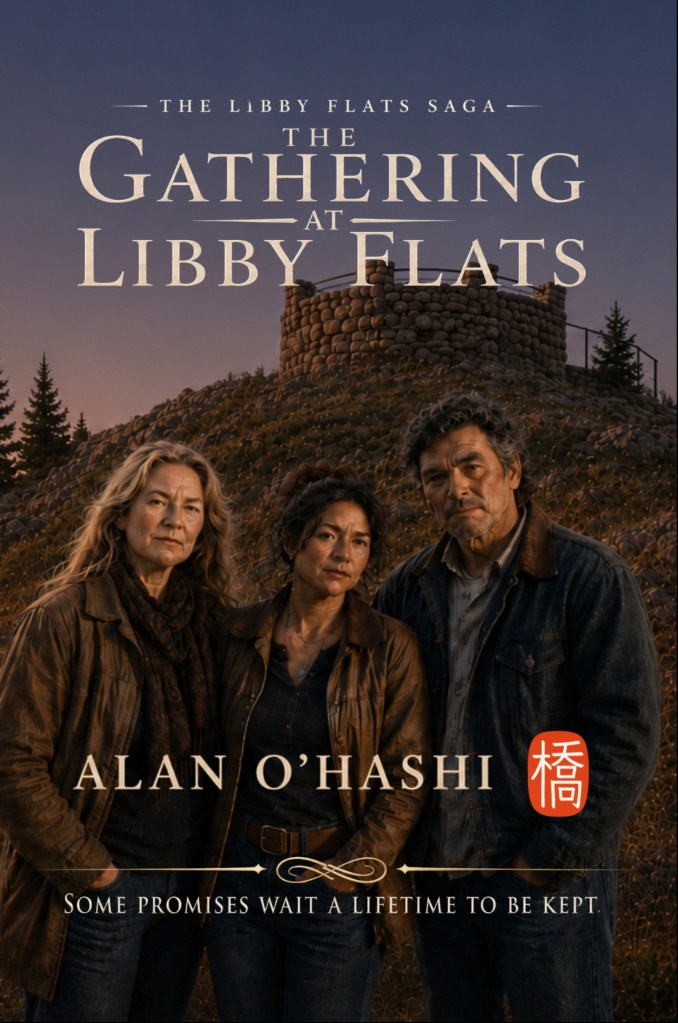
The Gathering at Libby Flats

In The Gathering at Libby Flats, Elizabeth Steiner returns to Boulder from New Orleans after Hurricane Katrina to attend her dying mother Becca’s funeral. Her return brings together people who haven’t seen one another in nearly four decades.
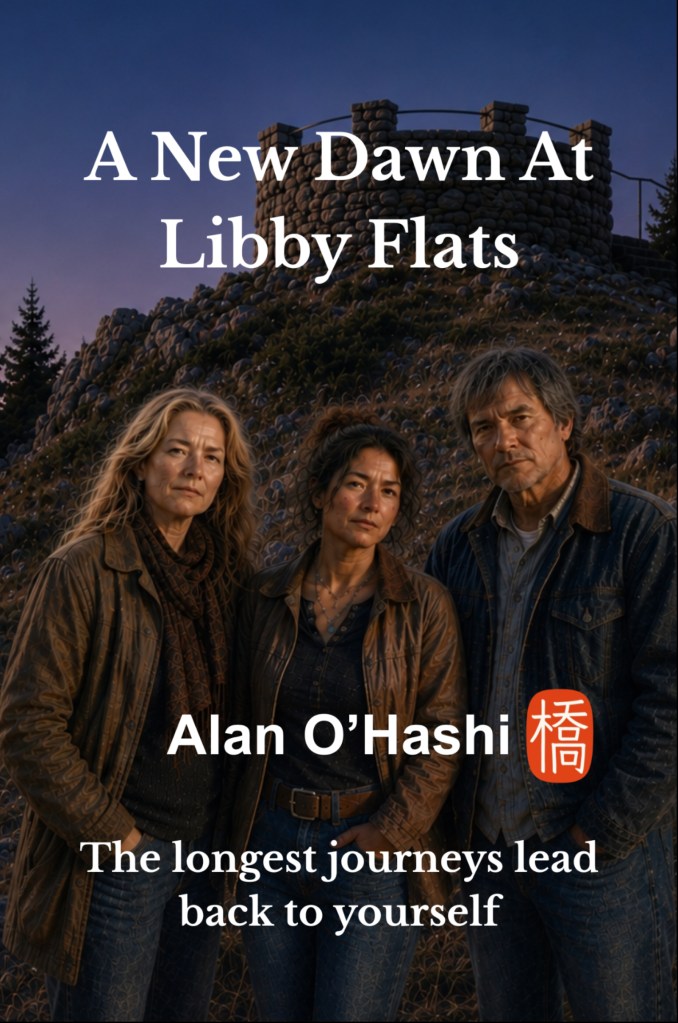
Elizabeth, Gary, Avery and Jack share a complicated history that reaches back to the 1960s, when they spent summers at Quiver Mountain Ranch near Lander, Wyoming. Old friendships, love, rebellion, and betrayals shaped their lives, and eventually drove them apart.

Now they gather again at Libby Flats to fulfill a promise Becca made decades earlier.

Set partly in contemporary Boulder and partly in the Wyoming of the past, the novel explores what happens when the past refuses to stay buried—and whether it is ever too late to make peace with it.

Buy The Gathering at Libby Flats

Vengeance at Stone Creek

Vengeance at Stone Creek takes a darker turn into the history behind one of the characters who appears in The Gathering at Libby Flats.
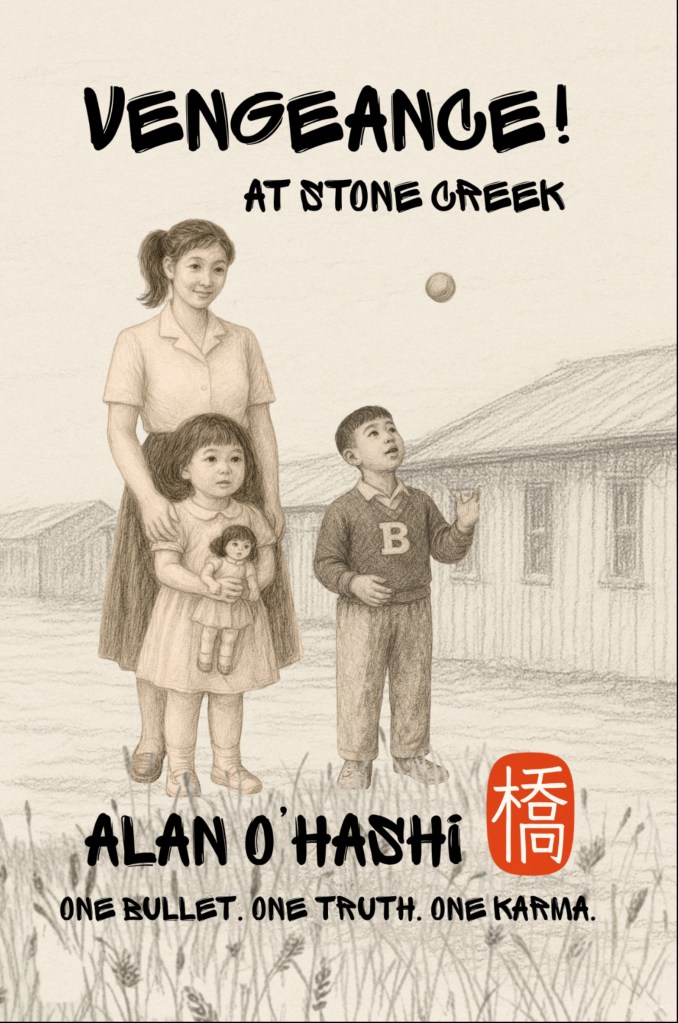
Tak Fujiyama is the son of a Japanese American family whose story stretches from the Japanese American community in San Pedro, California to the wartime incarceration of Japanese Americans during World War II. His family eventually opens a Japanese restaurant in Laramie, but Tak carries a much older wound.

During the war, senseless violence at an incarceration camp leaves a mark that doesn’t disappear when the barbed wire comes down. Tak’s search for justice and revenge forces him to confront what happened to his family and what it means to carry the consequences of injustice across generations.

The novel is part historical fiction, part mystery, and part revenge story, but at its heart it asks a simple question: What happens when an injustice is never made right?

Buy Vengeance at Stone Creek

What the Morning Brings

What the Morning Brings takes the saga into the summer of 1968, when America seems to be coming apart at the seams.
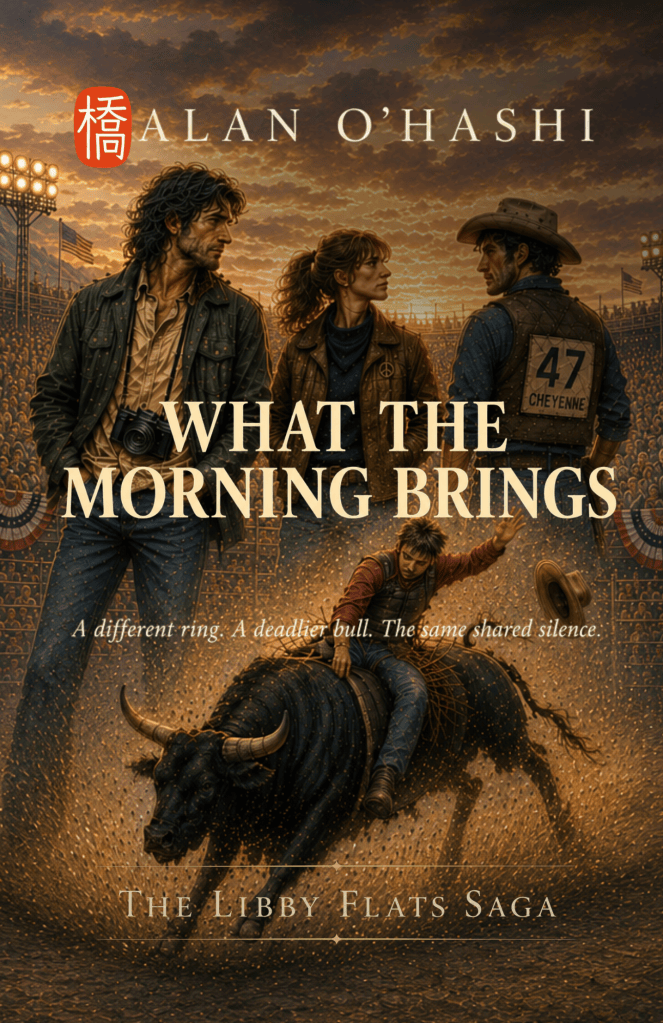
Inspired by Ernest Hemingway’s The Sun Also Rises, the novel reimagines Hemingway’s world of disillusionment and privilege in Boulder during the 1960s Vietnam War, civil rights movement, and social upheaval.

Hemingway’s Jake Barnes finds himself in Boulder, where he encounters a minor character from Vengeance at Stone Creek. The meeting connects Hemingway’s fictional world with my own and turns a familiar literary landscape into something distinctly Western and distinctly American.

The rodeo, Vietnam, Boulder, and Cheyenne replace the cafés and bullfights of post-World War I Europe. Beneath the surface, however, the same questions remain: What do we do after the world we believed in falls apart? Where do we go when we no longer belong to the world that made us?

Buy What the Morning Brings

Three stories. One fictional world.

The three novels move back and forth through time, but they share a common concern: how the past shapes who we become and how much power we have to change what comes next.

The Libby Flats Saga isn’t finished. I’m still discovering connections between the characters, places, and stories. That’s one of the pleasures of creating a fictional world: sometimes the characters know where they’re going before I do.

For now, these three books provide three different doorways into that world.

Welcome to Libby Flats.
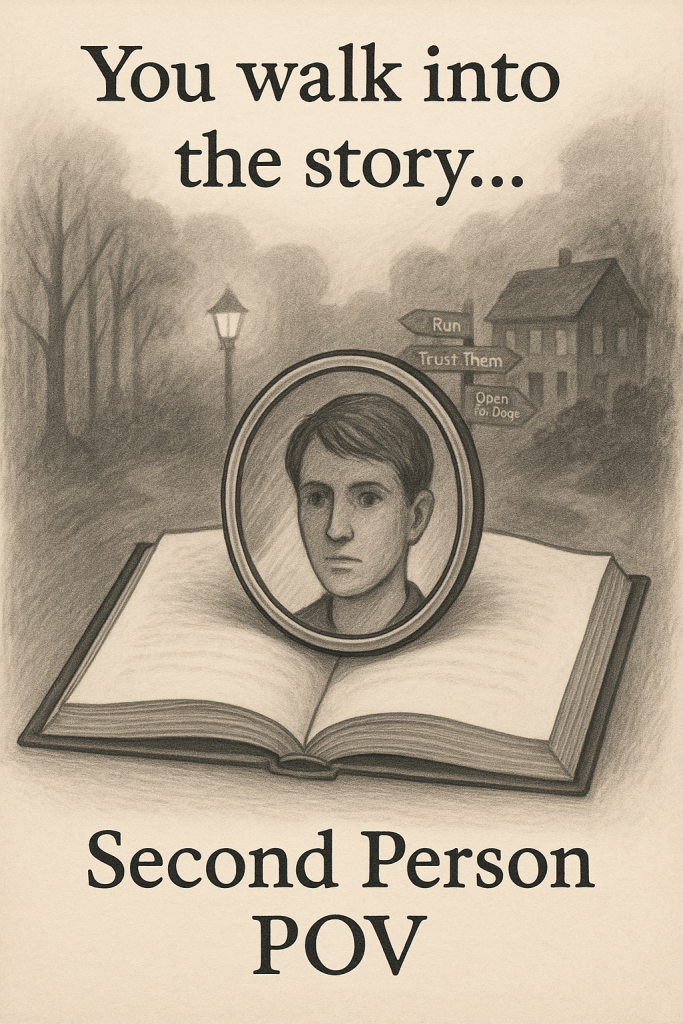
Unlock Immersion: Writing in Second-Person Perspective

By Jennifer Braddock – Editor


You walk into the story, not as an observer, not as a distant narrator, but as the main character.

Your decisions drive the plot.
Your fears shape the stakes.
Your thoughts echo in every paragraph.

Welcome to the second-person point of view, where you are the story.

What Is Second-Person POV?

In most stories, you follow someone else’s journey. Writing in the second-person, the writer flips the script. It tells the story using the pronoun “you.”

“You wake up in a city you don’t recognize. Your wallet is missing. Someone left a note on the hotel mirror: ‘Don’t trust the concierge.’”

This isn’t a literary gimmick. Done right, second-person creates immersion, tension, and intimacy unlike any other perspective.

How It Works

Second-person POV uses you, your, and yourself. This approach pulls the reader directly into the narrative like a character in a game or a dream.

Second-person POV isn’t exactly mainstream. It’s found in:

  • Choose-your-own-adventure books
  • Interactive fiction & gaming narratives
  • Literary experiments
  • Poetry and flash fiction
  • Self-help or motivational writing

Sometimes, you’re meant to be yourself. Other times, “you” is a constructed, unnamed character the writer wants you to inhabit. Second-person POV has it’s purpose.

  • Immersion: It’s like virtual reality in prose form.
  • Style: It’s unusual, bold, and memorable.
  • Intimacy: The story speaks to you, not just at you.
  • Control: In interactive stories, you guide the plot.

Don’t say that I didn’t warn you. Second person isn’t for the faint of heart. It’s hard to sustain over a long story without fatiguing the reader or losing clarity.

  • It can feel forced or unnatural if the reader doesn’t identify with “you.”
  • It’s hard to develop deep internal emotions.
  • It limits point of view flexibility. There’s no slipping into someone else’s head.
  • Second-person shines for short pieces or experimental fiction.

How to Use It Well

To begin, ground the reader in detail. Use sensory cues to keep the story vivid. This way, you can engage the reader by making them a part of the story. Set expectations early by telling the reader who the “you” is. Are they the reader or a fictional character? While it’s tempting to create continuity, avoid repetitive sentence structure. The narrative voice needs to be consistent, confident, and clear, if not “on the nose.”

Second-person POV is a narrative mirror. The reader sees not a good guy, not a bad guy, only themselves caught in a moment.

It’s personal and risky, but if you’re brave, it’s unforgettable.

Do you have questions or comments? Ask Besty Bot about the writing craft and how to publish your book with Best Chance Media!

Copy and Share This Post on Your Social Media:

🔁 Have you ever written in second person? Share your experiments, wins, or fails in the comments. And if you haven’t yet… maybe it’s time you did. #WritingTips #POV #SecondPersonPOV #AmWriting #NarrativeVoice #CreativeWriting #WritersOfInstagram #StorytellingMagic #YouAreTheStory #WritingInspiration https://bestchancemedia.org/2026/03/05/you-walk-into-the-story-writing-in-second-person-pov/

← Back

Thank you for your response. ✨

Writing First-Person POV Stories: Tips for Authenticity

By Jennifer Braddock – Editor

In first-person storytelling, dialogue is never neutral. It’s a recounting of memories and is shaped by the narrator’s memory and interpretation of the exchange. For example:

“We’ll see your Papa soon,” Mama said, not looking up from her knitting.

She always had that unemotional tone when she was nervous. I was just a kid when he was arrested by the FBI. I didn’t know what was happening.

Dialogue becomes an opportunity to show character, subtext, and tension, not just deliver facts.

Use these techniques to strengthen first-person dialogue:

  • Narrator’s observations: “You’re going like that?” she asked. I looked down at my shirt. Plain gray. A coffee stain near the hem.
  • Internal thoughts between lines: “No reason,” she said. Her smile didn’t match her eyes.
  • Nonverbal cues: She tapped her nails on the table. I braced for a question I didn’t want to answer.

Weak vs. Strong First-Person Dialogue Example

Weak:

“I don’t want to go,” I said.
“Why not?” she asked.
“Because I don’t feel like it,” I said.
“Fine. Stay here,” she said.

Strong:

“I don’t want to go,” I said, not meeting her eyes.

“Why not?” she asked, arms folded like a parent catching a lie.

“I just… don’t feel like it,” I shrugged.

“Fine. Stay here.” Her mouth tightened.

She didn’t slam the door, but she might as well have.

The second version shows emotion, body language, and subtext from the narrator’s perspective. This lets the reader experience the tension instead of simply reading about it.

How Can a First-Person Narrator Know About Events They Didn’t Witness?

One common question about first-person writing is: How do I show something the narrator didn’t see? Here are five ways to handle this while staying true to first-person limits:

  • Dialogue: Another character tells the narrator what happened. “My mom told me he didn’t even cry at the funeral,” she said.
  • Discovery: The narrator reads a letter, watches a video, or finds an object. I unfolded the note. Just six words: “I tried. You never saw me.”
  • Rumors or Secondhand Info: Let the narrator hear it from someone else. Everyone said Mark was the last to see her. No one knew what they talked about.
  • Dreams or Flashbacks (used carefully): These work when grounded in the narrator’s memory or subconscious. They should not be used as a lazy plot device.
  • Imaginative speculation (with voice): The narrator may guess what happened, or misremember it entirely. This can lead to compelling, unreliable narration.

Final Thoughts

First-person writing is more than choosing a point of view. It’s choosing a relationship with the reader. When done right, it feels like confession, conversation, and story all at once.

It’s the voice that says:
“Let me tell you what really happened…”

Action to Experiment

Try rewriting a scene from your work-in-progress in first person. What does the character notice that a distant narrator wouldn’t? What do they leave out? How do they color the truth? Your character already has a story to tell. Let them tell it.

Do you have questions or comments? Ask Besty Bot about the writing craft and how to publish your book with Best Chance Media!

Copy and Share This Post on Your Social Media:

📚 Writers – Is First Person Right for Your Story?
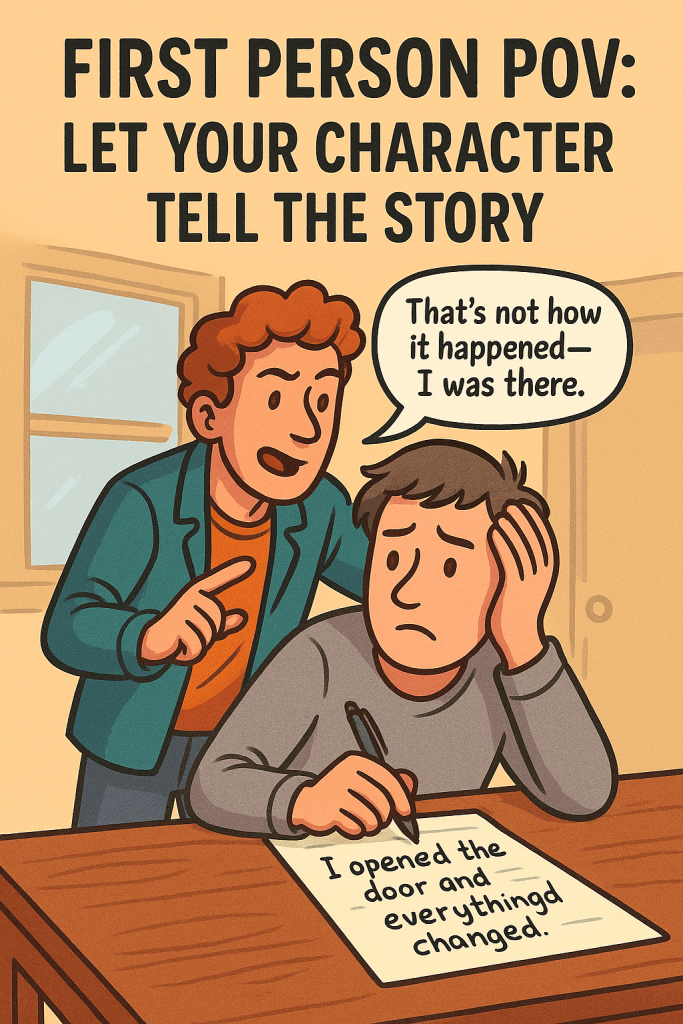
“I opened the door and everything changed.”

That’s the power of first-person POV: raw, intimate, and immediate. But how do you show what your narrator didn’t see? How do you balance showing and telling?

🎯 This week’s post breaks it down:

  • The show vs. tell sweet spot
  • Writing real, revealing dialogue
  • How to handle scenes the narrator missed
  • Reviews of two standout first-person novels

✍️ Whether you’re revising or just starting out, first person might be the voice your story needs. AmWriting #WritingTips #FirstPersonPOV #ShowDontTell #WritersOfInstagram #WritingAdvice #FictionWriters #WritingCommunity #StorytellingTips #POVMatters #DialogueWriting https://bestchancemedia.org/2026/02/19/dialogue-in-first-person-showing-through-whats-said-and-left-unsaid/

← Back

Thank you for your response. ✨

Show, Don’t Tell: Unlocking Emotional Depth

You’ve probably heard the advice “show, don’t tell” tossed around in every writing workshop, critique group, or how-to book. If you’re a newer writer, that phrase can feel like a riddle.

  • What does it really mean?
  • They sound like the same thing!
  • When is telling actually okay?

Let’s break it down.


What is “Telling”?

Telling is summarizing a scene, emotion, or action. It’s straightforward and often quick. Think of it like giving the audience a news report.

Telling example:

Maria was nervous about the audition. She didn’t think she was good enough.

The reader gets the information, but there’s no emotional immersion. You’re told what Maria feels, but you don’t feel it alongside her.


What is “Showing”?

Showing brings the reader into the scene with sensory details, action, dialogue, and subtext. It lets readers experience the story.

Showing example:

Brenda clutched the script so tightly her knuckles turned white. She mouthed the lines again, her voice barely a whisper. When the casting assistant called her name, her feet stayed rooted to the floor for half a beat longer than necessary.

You aren’t told she’s nervous. You see it in her actions. Showing invites the reader to infer emotion and meaning through behavior and atmosphere.


So… Is Telling Bad?

No! Telling has its place, especially when you need to move through time quickly, summarize minor events, or create narrative distance. It becomes a problem when it replaces emotional depth or undermines key moments.

Here’s the trick:
Use telling for transitions. Use showing for transformation.


Blending the Two

Good storytelling balances showing and telling. Imagine your manuscript like a film. You don’t need to zoom in on every moment in high-def slow motion. When your character’s heart is breaking, let us feel it. When the villain turns, show us the glint in their eye. When your protagonist is growing, show us the stretch marks of that change.


Let’s Compare – A Scene, Told and Shown

Told:

Jesse was heartbroken when Elena left him. He missed her terribly.

Shown:

Jesse stood in the darkened kitchen, the coffee pot still half-full from the morning she left. He picked up her favorite mug and ran his thumb along the chip at the rim. The silence in the apartment buzzed louder than the refrigerator.

The first version is faster, but emotionally distant. The second immerses you in Jesse’s world. It lets you feel the weight of his grief without ever using the word “heartbroken.”


Your Turn – Take Action

The next time you revise a scene, ask yourself:

  • Am I showing emotion, or just labeling it?
  • Can I replace a summary sentence with a sensory detail, action, or snippet of dialogue?
  • Where does telling help with pacing, and where does it steal emotional resonance?

Writing isn’t about choosing one over the other. It’s about mastering both.

Your challenge:
Take one paragraph from your current draft. Identify where you’re telling. Then rewrite it to show. Feel the difference. See how your story comes alive.

You’ve got this. Your readers don’t want to be told how your character feels. They want to feel it with them.


Final Word

Showing is where your story breathes. Telling is how it moves. Together, they give your narrative rhythm, shape, and soul. Mastering the difference is what turns decent prose into unforgettable fiction.

Now go show us something we can’t forget.

Do you have questions or comments? Ask Besty Bot about the writing craft and how to publish your book with Best Chance Media!

Show, don’t tell” is great advice—but what does it really mean? And when is telling okay? Learn how to balance both, with examples and a challenge to improve your next scene.

https://bestchancemedia.org/2025/02/12/show-dont-tell-unlocking-emotional-depth/
#ShowDontTell #WritingTips #AmWriting #WritersLife

Leave a Reply

Third-Person Omniscient POV: The Day the Fence Took Everything

A reflection on truth, memory, and the power of third-person omniscient narration

By Jennifer Braddock – Editor

Ever wanted to play god without the responsibility of smiting anyone? Welcome to third-person omniscient, where you know everything, see everything, and judge nothing. This is the narrative voice that floats above your characters. Before you put on your all-seeing narrator hat, let’s discuss the what, why, and how.

Third-Person Omniscient Traits and Boundaries

Why tell this story through the eyes of many? Because stories like the one about Camp Arroyo aren’t just about individuals. They’re about a system. A society. A truth that implicates everyone.

From this point of view, the narrator is not a character in the story. Instead, they’re an all-knowing presence who can dip into any character’s thoughts, emotions, memories, or future dreams, and offer commentary.

  • You know everyone’s thoughts, but don’t share them all at once. Pick your spots. Otherwise, it’s emotional whiplash.
  • The narrator has a tone. Even if it’s not a character, the voice telling the story has a personality: wry, wise, ironic, or lyrical.
  • You can zoom in and out, but do so smoothly. Think of it like directing a movie: wide shots for scene-setting, close-ups for emotion.
  • Avoid ‘head-hopping’ mid-paragraph. Just because you can see into every head doesn’t mean you should jump between them too fast.

I’ll illustrate these points using an example from a historical fiction book I’m writing, titled Vengeance at Stone Creek.

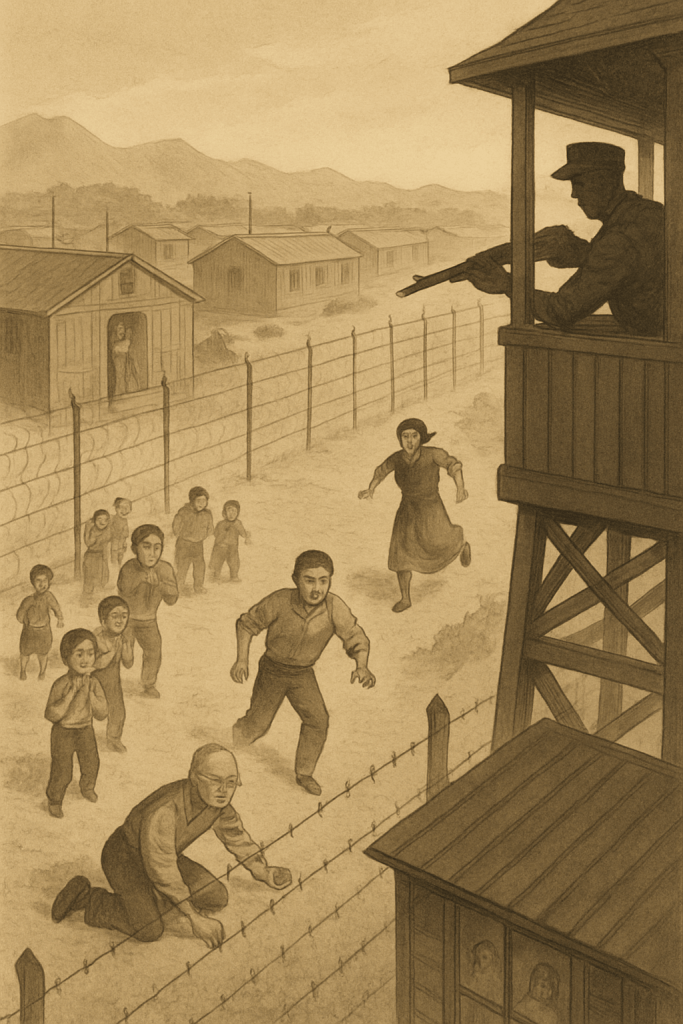
Camp Arroyo, Colorado, was one of ten wartime incarceration centers for Japanese Americans. It baked under the sun as it had every afternoon.

Children played. Mothers folded laundry. A sentry cleaned his rifle in the guard tower.

And then: the shots.

Tak Fujiyama was seven years old when he saw his friend Seito San collapse into the dust.

Everyone saw. No one stopped it. Sumiko, his mother, was already sprinting towards the commotion. The kitchen crew froze mid-prep, couldn’t scream. The guard, Pfc. Joe Darrow said nothing. He brushed the shell casings off the tower floor as if he were brushing crumbs from a table.

That moment changed everyone.

What About Dialogue?

In third-person omniscient, dialogue works the same way as other third-person perspectives:

“I’ll get you!” Tak screamed at Private Darrow, dusting the snow off his oversize Army coat. He hadn’t heard gunshots before and was shaken up by the whole ordeal
Darrow didn’t answer. He was wondering if he’d lose rank after the shooting incident.

The narrator, meanwhile, knew what Tak and Darrow were thinking.

You can also add asides or commentary that no character would know, which gives the narrator that wise, slightly smug quality:

Sumiko was exhausted from running from the barracks. She wasn’t quite sure what had happened. She walked closer and was overwhelmed with what she saw.

The Show-Don’t-Tell Balance

Third-person omniscient gives you ultimate show/tell control. Want to show emotion? Zoom into a character’s thoughts. Want to tell us something about the world? Zoom out and narrate. Just make sure the shifts feel intentional, not chaotic.

This is the storyteller voice of classic literature (think Dickens or Tolstoy) and some modern epics. It’s panoramic, wise, and capable of zooming in or out at will.

Third-person omniscient narration gives readers access to collective memory. It allows us to hear not just what happens, but what’s felt. All at once, the story pulls back the curtain on silence, shame, complicity, and courage.

Tak’s disbelief lives beside Darrow’s detachment. Sumiko’s heartbreak collides with her son’s helplessness. Even the wind plays a role, carrying the sound across camp like a cruel messenger.

This perspective doesn’t dilute the pain, it amplifies it. When the reader knows what everyone knows, and still nothing stops the tragedy, the horror is total.

Truth Wrapped in Fiction

Tak’s story is fictional, but the bullets, the towers, and the silence are real. More than 120,000 Japanese Americans were forcibly removed from their homes during World War II. Most had committed no crime. Many were children, and some, like those at Camp Arroyo, never came home.

By using third-person omniscient narration, Vengeance at Stone Creek invites readers not to choose sides. Readers can see the whole landscape. They can sit in the shoes of the witness, the victim, the perpetrator, and the bystander.

Because when history repeats itself, it’s often because too many people looked away.

Your Role in the Story

You weren’t in the guard tower.
You weren’t holding the rifle.
You are here now, reading, remembering, deciding what comes next. The story isn’t just told from Tak’s point of view. That’s the point.

Third-person omniscient lets the reader see the entire moment. It reveals how trauma spreads across a scene like a shock wave. It goes from Seito San falling to Sumiko running and the cook dropping a spoon. It gives the reader access to the full spectrum of awareness, emotion, and silence.

First-person limits us to one set of eyes. Third-person limited creates a one mind boundary. Omniscient opens the sky.

It asks us not only to see, but to understand what was done, what was allowed, and what was ignored.

For Writers: A Call to Experiment

Are you a writer? Try writing a scene using third-person omniscient.
Let us feel not just the protagonist’s heart, but the room’s temperature.
Let us see the villain’s hesitation.
Let us watch a neighbor look away.
Give us the whole truth, not just a character’s version of it.

Third Person Omniscient isn’t just a Point of View. Its lens, conscience, and chorus. Use it wisely. Some stories don’t belong to one person.
They belong to all of us.


Do you have questions or comments? Ask Besty Bot about the writing craft and how to publish your book with Best Chance Media!

Copy and Share This Post on Your Social Media:

📚 Ever wished your story could show everything at once?
That’s the magic of third-person omniscient. You’re not just in one character’s head. You’re in everyone’s.
– The mother screaming.
– The soldier pretending not to care.
– The cook frozen mid-stir.
– The wind carrying truth through the Japanese internment camp.

In one shot, the whole world reacts, and you, the writer, see it all. 🖊️ Try it: Rewrite a key scene from your story using third-person omniscient.
– Feel the shift in power.
– See what your characters can’t hide.

#WritingTips #ThirdPersonOmniscient #NarrativeVoice #WritersOfInstagram #HistoricalFiction #PointOfView #WriteWithDepth #StorytellingCraft #FictionWriters #AmWriting https://bestchancemedia.org/2026/02/05/the-day-the-fence-took-everything/

← Back

Thank you for your response. ✨

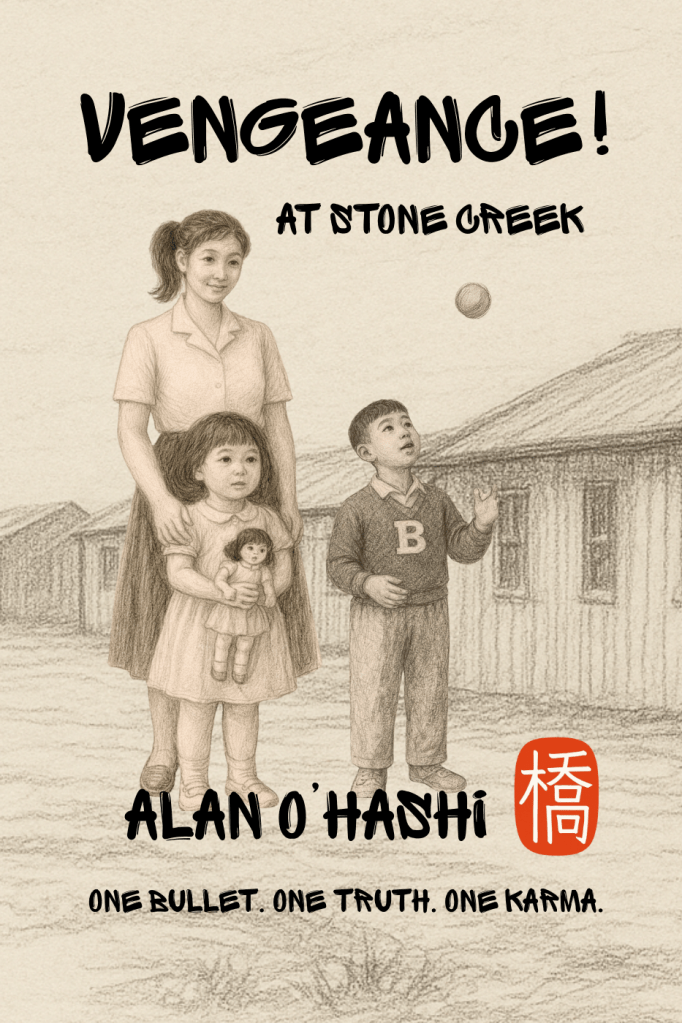
Vengeance! at Stone Creek: The Executive Order That Never Ended

Some novels entertain. Some educate. A rare few refuse to let the reader off the hook.

Vengeance! at Stone Creek is one of those books.

Set in the long shadow of World War II–era Japanese incarceration, the novel explores what happens after injustice has been legalized and filed away.

Rather than retelling history, it integrates unanswered questions and the uncomfortable truth, deferring accountability indefinitely.

Alan O’Hashi writes with restraint and precision. The tension comes from moral pressure and the question history prefers not to ask: What is owed when the harm was sanctioned by law?

When a soldier fires his rifle from a guard tower inside Camp Arroyo, a Japanese American incarceration camp near Stone Creek, Colorado, the sound echoes far beyond the barbed wire. 

What happens next is buried under military procedure, fear, and silence. Official reports flatten the truth. Witnesses are discouraged from speaking. Inside the Camp, grief is expected to be swallowed quietly.

Tak Fujiyama is a child when the shots are fired, but the moment marks him for life. Incarcerated alongside his family without trial, Tak learns early that innocence offers no protection and that the law does not always serve justice.

As the War grinds forward, Camp Arroyo becomes its own harsh world of dust storms, guard towers, loyalty questionnaires, and the daily humiliation of being labeled an enemy by the country of his birth. The violence at Stone Creek is never properly addressed, and Tak is left to grow up carrying an unanswered wound.

After the War ends, America moves on quickly.

The WRA dismantled the camps, archived files, and released families with bus tickets. Tak learns that forgetting is the price of belonging. He builds a life beyond the Camp, but memory proves stubborn. The injustice refuses to fade, shaping his relationships, his sense of self, and his understanding of right and wrong.

Years later, unanswered questions draw Tak back to Stone Creek. His past resurfaces through testimony, suppressed records, and the memories of those who survived the Camp’s violence. Tak confronts what was taken from him and others and reckons with a difficult truth. Vengeance feels like the only remaining form of balance.

Vengeance! at Stone Creek is a powerful work of historical fiction that explores the lasting psychological and moral consequences of wartime incarceration. Through Tak’s journey, the novel examines loyalty under pressure, the burden placed on survivors to remain silent, and the generational cost of unresolved trauma. My story illuminates a rarely told chapter of American history, where citizenship failed to protect and the rule of law bent under fear and prejudice.

At its heart, this is a book about memory, who controls it, who benefits from forgetting, and what happens when those harmed refuse to let the truth disappear. Vengeance! at Stone Creek asks hard questions about accountability and justice, and about what remains when a nation chooses expedience. It is a sobering, deeply human novel about the price of silence and the long shadow cast by injustice.

This novel is for readers who loved Snow Falling on Cedars, No-No Boy, or There There, but it stands firmly on its own. It’s spare, deliberate, and quietly furious. The kind of book that sparks hand-selling conversations. The kind readers come back to talk about.

Vengeance! at Stone Creek dropped February 19th and is available for order from your local bookstore. Buy a signed copy or Buy a copy online.

Vengeance! at Stone Creek: A Novel of Injustice

Some novels entertain. Some educate. A rare few refuse to let the reader off the hook.

Vengeance! at Stone Creek is one of those books.

Set in the long shadow of World War II–era Japanese incarceration, the novel explores what happens after injustice has been legalized and filed away.

Rather than retelling history, it integrates unanswered questions and the uncomfortable truth, deferring accountability indefinitely.

Alan O’Hashi writes with restraint and precision. The tension comes from moral pressure and the question history prefers not to ask: What is owed when the harm was sanctioned by law?

When a soldier fires his rifle from a guard tower inside Camp Arroyo, a Japanese American incarceration camp near Stone Creek, Colorado, the sound echoes far beyond the barbed wire. 

What happens next is buried under military procedure, fear, and silence. Official reports flatten the truth. Witnesses are discouraged from speaking. Inside the Camp, grief is expected to be swallowed quietly.

Tak Fujiyama is a child when the shots are fired, but the moment marks him for life. Incarcerated alongside his family without trial, Tak learns early that innocence offers no protection and that the law does not always serve justice.

As the War grinds forward, Camp Arroyo becomes its own harsh world of dust storms, guard towers, loyalty questionnaires, and the daily humiliation of being labeled an enemy by the country of his birth. The violence at Stone Creek is never properly addressed, and Tak is left to grow up carrying an unanswered wound.

After the War ends, America moves on quickly.

The WRA dismantled the camps, archived files, and released families with bus tickets. Tak learns that forgetting is the price of belonging. He builds a life beyond the Camp, but memory proves stubborn. The injustice refuses to fade, shaping his relationships, his sense of self, and his understanding of right and wrong.

Years later, unanswered questions draw Tak back to Stone Creek. His past resurfaces through testimony, suppressed records, and the memories of those who survived the Camp’s violence. Tak confronts what was taken from him and others and reckons with a difficult truth. Vengeance feels like the only remaining form of balance.

Vengeance! at Stone Creek is a powerful work of historical fiction that explores the lasting psychological and moral consequences of wartime incarceration. Through Tak’s journey, the novel examines loyalty under pressure, the burden placed on survivors to remain silent, and the generational cost of unresolved trauma. My story illuminates a rarely told chapter of American history, where citizenship failed to protect and the rule of law bent under fear and prejudice.

At its heart, this is a book about memory, who controls it, who benefits from forgetting, and what happens when those harmed refuse to let the truth disappear. Vengeance! at Stone Creek asks hard questions about accountability and justice, and about what remains when a nation chooses expedience. It is a sobering, deeply human novel about the price of silence and the long shadow cast by injustice.

This novel is for readers who loved Snow Falling on Cedars, No-No Boy, or There There, but it stands firmly on its own. It’s spare, deliberate, and quietly furious. The kind of book that sparks hand-selling conversations. The kind readers come back to talk about.

Why indie bookstores should carry it:

Because this is exactly the kind of book your customers expect from you. The stories they won’t discover through algorithms or celebrity lists. This story rewards thoughtful readers by inviting dialogue.

Vengeance! at Stone Creek is available this February. Recommend it. Put it in the hands of readers who want comfort and the truth. Order from Ingram iPage, 979-8-9894213-1-2, Retail Price $19.95 USD.

← Back

Thank you for your response. ✨

The Gathering at Libby Flats: The longest journeys lead back to yourself

Step into Wyoming’s wide-open skies. Experience the turbulent college days of the 1960s. Embark on a 2006 road trip of reckoning. The Gathering at Libby Flats by Alan O’Hashi is a sweeping tale. The image is the author in 1967 looking out from Libby Flats in the Medicine Bow National Forest.

This multigenerational story explores love, loss, rebellion, and reconciliation. It bridges the past and present. This novel features vivid landscapes and unforgettable characters. It asks: what occurs when long-buried secrets resurface? How does one handle a decades-old promise that demands to be kept?

Elizabeth Steiner embarks on a 2006 road trip. She travels from New Orleans to Boulder. Her goal is to reconcile with her dying mother, Becca. At Becca’s funeral, Elizabeth realizes she must resolve the differences with her father, Gary.

She must also tackle issues with his estranged university friends, Jack and Avery. They reunite after 38 years to fulfill a long-forgotten pact. This coming-of-age story explores themes of love, identity, and rebellion. It also examines the enduring power of friendship. The characters navigate their shared history and rediscover old bonds.

The story is captivating. It tells a love triangle. The narrative presents conflicts around race and gender identity. It also explores youthful rebellion and the enduring power of friendship. In the 1960s, Becca Pembroke travels to Quiver Mountain Ranch near Lander, Wyoming, for a summer job. She flees her stodgy New Jersey life. This includes wealthy and egotistical Jack Middleton, whom her mother thinks is Becca’s perfect match.

While in Wyoming, she befriends Gary, the ranch owner’s son. Gary is more interested in fighting in the Vietnam War than in pursuing girls. The two work with another hand, Avery Meadows, from Jackson.

Becca establishes in-state residency. She studies anthropology at the University of Wyoming (UW) in Laramie. She pursues a lifelong interest in returning ceremonial artifacts to Native American tribes. This leads to significant personal revelations that affect her family.

Avery joins her at UW, majoring in wildlife management. They reunite with Gary upon his honorable discharge from the U.S. Navy. He enrolls at UW to study journalism rather than returning home to manage his family ranch.

Becca’s mother persuades Jack to transfer from Princeton University to UW. His mission is to rescue Becca from the free-spirited Wild West. She shows more interest in Gary, causing a big rift with Jack, in which Avery constantly mediates. Becca forms a pact with her three acquaintances to keep the peace. A big blow-up between Jack and Gary estranges the group.

Gary and Becca eventually marry and have a daughter, Elizabeth. Thirty-eight years later, in 2006, Becca passed away at the Blue Sky Village cohousing community in Boulder, Colorado. Elizabeth reluctantly returns home to Boulder for her mother’s funeral.

See through the eyes of Elizabeth, Gary, Avery, and Jack. Fulfill Becca’s Pact at Libby Flats near Laramie. Navigate their individual origin stories and life memories. This includes their shared time in Wyoming and their reunion in Boulder.

Order from Ingram iPage, 979-8-218-17767-6, Retail Price $19.95 USD.

If you have questions, start a conversation with Besty Bot …

← Back

Thank you for your response. ✨