The Accidental Wisdom Saga: Three Books for the Holidays

Three books. Three different journeys. One thing in common: life teaches us what we didn’t know we needed to learn.

The holiday shopping season is upon us. Before you surrender to the usual frenzy of finding the perfect gift, consider something different: a book that might make someone laugh, think, or see life from a new perspective.

Best Chance Media presents the Accidental Wisdom Saga, a three-book collection that explores the unexpected ways we find meaning in our lives. These aren’t instruction manuals for becoming a better person. They’re invitations to embrace our imperfections, recognize the choices we make, and discover that a little wisdom sometimes arrives when we least expect it.

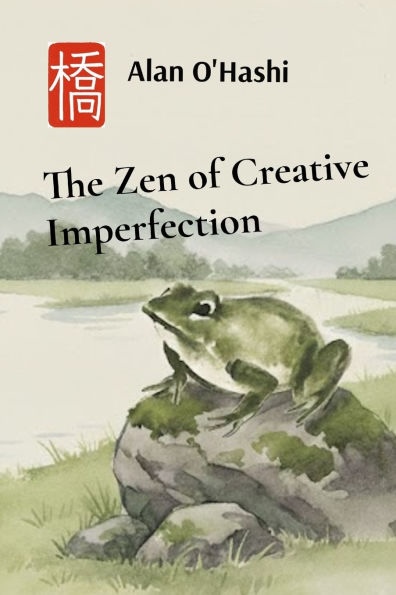
The Zen of Creative Imperfection

For anyone who has ever waited for the perfect moment, the perfect idea, or the perfect first sentence.
How often does the pursuit of perfection keep us from doing something worthwhile? We polish, revise, second-guess, and talk ourselves out of starting.

The Zen of Creative Imperfection celebrates the freedom that comes from letting go of the need to get everything exactly right. Creativity isn’t a straight line from inspiration to accomplishment. It’s a process of experimenting, making mistakes, taking unexpected turns, and discovering possibilities we couldn’t have imagined at the beginning.

Whether you’re a writer, artist, filmmaker, or someone who wants to approach life with a little more imagination, this book offers a gentle reminder: you don’t have to be perfect to create something meaningful.

Sometimes the best work comes from the happy accidents, the rough edges, and the willingness to begin before you have everything figured out.

Purchase the Zen of Creative Imperfection, a holiday gift for the creative soul who needs permission to stop overthinking and start creating.

How a Porta-Potty Saved Me: Making It Out of the Big Thompson Flood

The difference between life and death comes down to a decision you never expected to make.
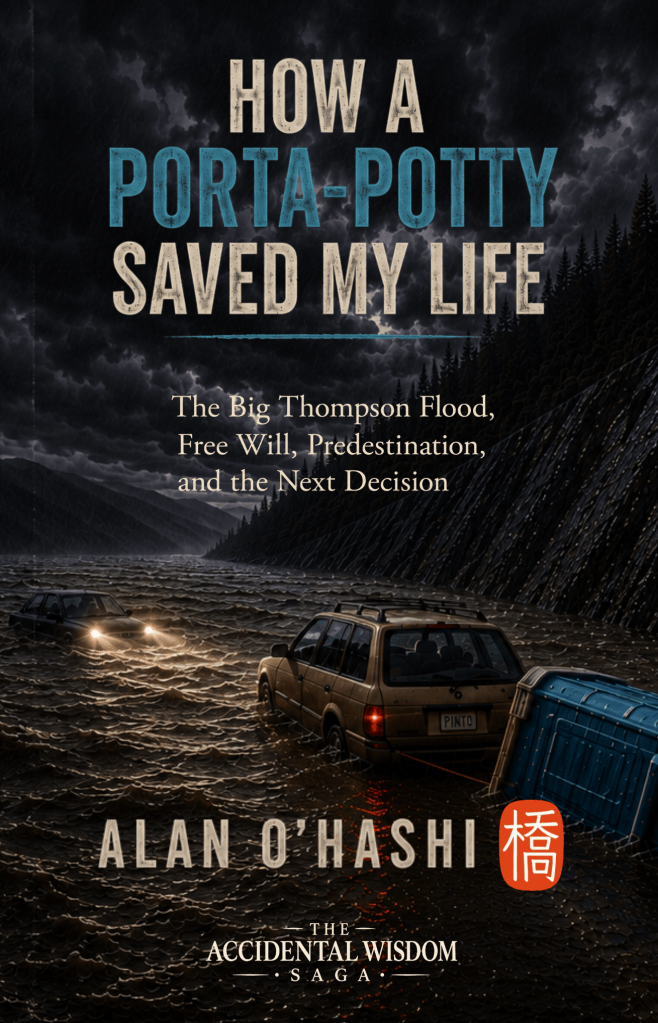
On July 31, 1976, a devastating flash flood hit Big Thompson Canyon in Colorado. I found myself caught in a disaster that would change my life and how I understood survival.

The story behind How a Porta-Potty Saved Me: Making It Out of the Big Thompson Flood is as unlikely as its title suggests. When the forces of nature overwhelmed any illusion of control, an ordinary object became part of an extraordinary survival story.

Looking back, I can’t help thinking about the role of free will and the choices we make. We don’t control every circumstance that comes our way. We can’t predict when the ground beneath us will shift, literally or figuratively. But sometimes our decisions, instincts, and willingness to act can make a difference.

Survival isn’t always about grand gestures or heroic plans. Sometimes it means improvising with what you have and doing the best you can with the hand you’ve been dealt.

My experience in the Big Thompson Flood taught me that life can turn on a dime. It also left me with a lasting appreciation for the unpredictable ways we find our way through adversity.

Purchase How a Porta-Potty Saved My Life, a holiday gift for the survivor, the adventurer, or anyone who appreciates a true story stranger than fiction.

Not Exactly Holy: A Devotional for the Not-So-Religious

Forty days of reflection without requiring a leap of faith or a halo.
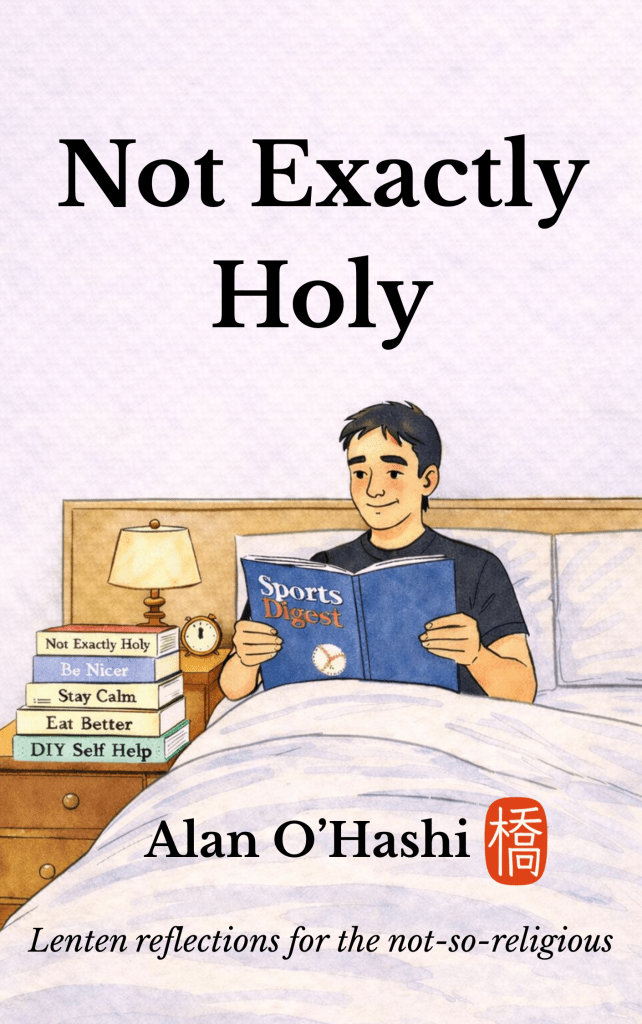
Not everyone feels at home in a church pew. Some of us have questions, reservations, or a healthy suspicion of people who claim to have all the answers. That doesn’t mean we’ve given up on searching for meaning.

Not Exactly Holy is a devotional for people who want to reflect on life’s bigger questions without feeling that they need to sign on to a particular religious formula. It offers a different approach to the traditional devotional: thoughtful reflection for those who are spiritually curious but not necessarily religious.

The journey is about examining our choices, considering how we treat one another, and finding meaning in the everyday experiences that shape our lives. You don’t have to be a saint to benefit from a little introspection. You don’t even have to be sure what you believe.

Sometimes the most worthwhile spiritual questions begin with a simple admission: I don’t have all the answers.

Purchase Not Exactly Holy, a holiday gift for the thoughtful skeptic, the spiritual seeker, or anyone who appreciates reflection without the sermon.

Three Books. Plenty of Accidental Wisdom.

What connects creativity, surviving a flood, and exploring spirituality? All three remind us that life rarely unfolds as planned.

We make choices. Circumstances intervene. We improvise, stumble, learn, and keep moving. Along the way, we might discover that wisdom doesn’t always arrive through careful planning or a perfectly executed strategy. Sometimes it sneaks up on us.

That’s the idea behind the Accidental Wisdom Saga.

This holiday season, give someone a story to enjoy, an idea to ponder, or a fresh perspective on the unexpected adventure we call life.

Explore the Accidental Wisdom Saga from Best Chance Media, and remember: you don’t have to have it all figured out to find something meaningful along the way.

The best wisdom is the kind you stumble into by accident.
Show, Don’t Tell: Unlocking Emotional Depth

You’ve probably heard the advice “show, don’t tell” tossed around in every writing workshop, critique group, or how-to book. If you’re a newer writer, that phrase can feel like a riddle.

  • What does it really mean?
  • They sound like the same thing!
  • When is telling actually okay?

Let’s break it down.


What is “Telling”?

Telling is summarizing a scene, emotion, or action. It’s straightforward and often quick. Think of it like giving the audience a news report.

Telling example:

Maria was nervous about the audition. She didn’t think she was good enough.

The reader gets the information, but there’s no emotional immersion. You’re told what Maria feels, but you don’t feel it alongside her.


What is “Showing”?

Showing brings the reader into the scene with sensory details, action, dialogue, and subtext. It lets readers experience the story.

Showing example:

Brenda clutched the script so tightly her knuckles turned white. She mouthed the lines again, her voice barely a whisper. When the casting assistant called her name, her feet stayed rooted to the floor for half a beat longer than necessary.

You aren’t told she’s nervous. You see it in her actions. Showing invites the reader to infer emotion and meaning through behavior and atmosphere.


So… Is Telling Bad?

No! Telling has its place, especially when you need to move through time quickly, summarize minor events, or create narrative distance. It becomes a problem when it replaces emotional depth or undermines key moments.

Here’s the trick:
Use telling for transitions. Use showing for transformation.


Blending the Two

Good storytelling balances showing and telling. Imagine your manuscript like a film. You don’t need to zoom in on every moment in high-def slow motion. When your character’s heart is breaking, let us feel it. When the villain turns, show us the glint in their eye. When your protagonist is growing, show us the stretch marks of that change.


Let’s Compare – A Scene, Told and Shown

Told:

Jesse was heartbroken when Elena left him. He missed her terribly.

Shown:

Jesse stood in the darkened kitchen, the coffee pot still half-full from the morning she left. He picked up her favorite mug and ran his thumb along the chip at the rim. The silence in the apartment buzzed louder than the refrigerator.

The first version is faster, but emotionally distant. The second immerses you in Jesse’s world. It lets you feel the weight of his grief without ever using the word “heartbroken.”


Your Turn – Take Action

The next time you revise a scene, ask yourself:

  • Am I showing emotion, or just labeling it?
  • Can I replace a summary sentence with a sensory detail, action, or snippet of dialogue?
  • Where does telling help with pacing, and where does it steal emotional resonance?

Writing isn’t about choosing one over the other. It’s about mastering both.

Your challenge:
Take one paragraph from your current draft. Identify where you’re telling. Then rewrite it to show. Feel the difference. See how your story comes alive.

You’ve got this. Your readers don’t want to be told how your character feels. They want to feel it with them.


Final Word

Showing is where your story breathes. Telling is how it moves. Together, they give your narrative rhythm, shape, and soul. Mastering the difference is what turns decent prose into unforgettable fiction.

Now go show us something we can’t forget.

Do you have questions or comments? Ask Besty Bot about the writing craft and how to publish your book with Best Chance Media!

Show, don’t tell” is great advice—but what does it really mean? And when is telling okay? Learn how to balance both, with examples and a challenge to improve your next scene.

https://bestchancemedia.org/2025/02/12/show-dont-tell-unlocking-emotional-depth/
#ShowDontTell #WritingTips #AmWriting #WritersLife

Leave a Reply

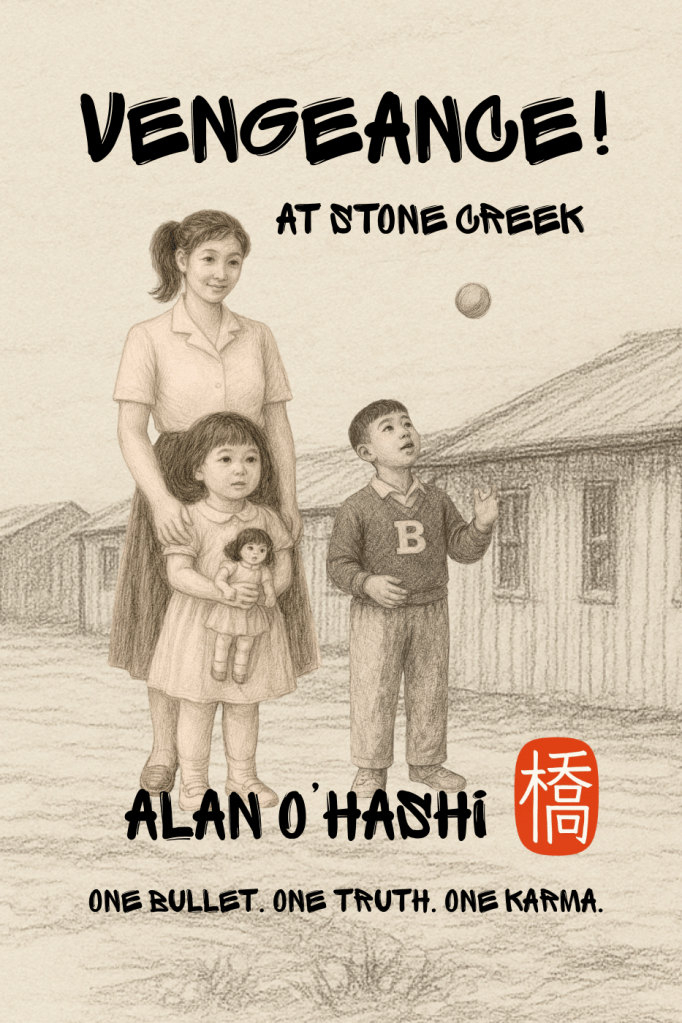
Vengeance! at Stone Creek: A Novel of Injustice

Some novels entertain. Some educate. A rare few refuse to let the reader off the hook.

Vengeance! at Stone Creek is one of those books.

Set in the long shadow of World War II–era Japanese incarceration, the novel explores what happens after injustice has been legalized and filed away.

Rather than retelling history, it integrates unanswered questions and the uncomfortable truth, deferring accountability indefinitely.

Alan O’Hashi writes with restraint and precision. The tension comes from moral pressure and the question history prefers not to ask: What is owed when the harm was sanctioned by law?

When a soldier fires his rifle from a guard tower inside Camp Arroyo, a Japanese American incarceration camp near Stone Creek, Colorado, the sound echoes far beyond the barbed wire. 

What happens next is buried under military procedure, fear, and silence. Official reports flatten the truth. Witnesses are discouraged from speaking. Inside the Camp, grief is expected to be swallowed quietly.

Tak Fujiyama is a child when the shots are fired, but the moment marks him for life. Incarcerated alongside his family without trial, Tak learns early that innocence offers no protection and that the law does not always serve justice.

As the War grinds forward, Camp Arroyo becomes its own harsh world of dust storms, guard towers, loyalty questionnaires, and the daily humiliation of being labeled an enemy by the country of his birth. The violence at Stone Creek is never properly addressed, and Tak is left to grow up carrying an unanswered wound.

After the War ends, America moves on quickly.

The WRA dismantled the camps, archived files, and released families with bus tickets. Tak learns that forgetting is the price of belonging. He builds a life beyond the Camp, but memory proves stubborn. The injustice refuses to fade, shaping his relationships, his sense of self, and his understanding of right and wrong.

Years later, unanswered questions draw Tak back to Stone Creek. His past resurfaces through testimony, suppressed records, and the memories of those who survived the Camp’s violence. Tak confronts what was taken from him and others and reckons with a difficult truth. Vengeance feels like the only remaining form of balance.

Vengeance! at Stone Creek is a powerful work of historical fiction that explores the lasting psychological and moral consequences of wartime incarceration. Through Tak’s journey, the novel examines loyalty under pressure, the burden placed on survivors to remain silent, and the generational cost of unresolved trauma. My story illuminates a rarely told chapter of American history, where citizenship failed to protect and the rule of law bent under fear and prejudice.

At its heart, this is a book about memory, who controls it, who benefits from forgetting, and what happens when those harmed refuse to let the truth disappear. Vengeance! at Stone Creek asks hard questions about accountability and justice, and about what remains when a nation chooses expedience. It is a sobering, deeply human novel about the price of silence and the long shadow cast by injustice.

This novel is for readers who loved Snow Falling on Cedars, No-No Boy, or There There, but it stands firmly on its own. It’s spare, deliberate, and quietly furious. The kind of book that sparks hand-selling conversations. The kind readers come back to talk about.

Why indie bookstores should carry it:

Because this is exactly the kind of book your customers expect from you. The stories they won’t discover through algorithms or celebrity lists. This story rewards thoughtful readers by inviting dialogue.

Vengeance! at Stone Creek is available this February. Recommend it. Put it in the hands of readers who want comfort and the truth. Order from Ingram iPage, 979-8-9894213-1-2, Retail Price $19.95 USD.

← Back

Thank you for your response. ✨

Reimagining Superman’s American Way for a Multicultural Future

Reimagine the American Way and learn ways to bridge multicultural divides in an ever-changing world

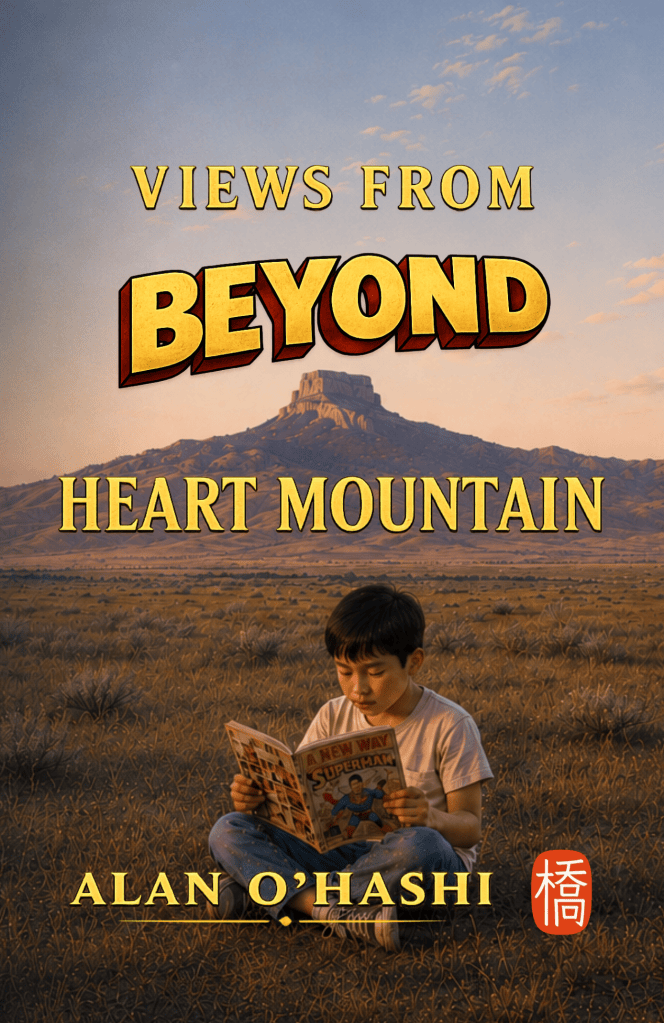
What does “Superman’s American Way” mean in today’s multicultural world? Views from Beyond Heart Mountain: True Stories of a Japanese American Baby Boomer challenges readers to think deeply about that question.

Superman’s origin story as an undocumented immigrant from another planet strongly influenced the author’s life. The Man of Steel championed the downtrodden. He valued inclusion over exclusion. He also wrestled with his own obstacles as an outsider trying to belong.

This memoir follows those themes. It demonstrates how lessons from a fictional hero can inform real-world strategies for cultural competency. These lessons also foster resilience.

The author’s family lived outside the West Coast exclusion zone. This zone sent 120,000 Japanese Americans to incarceration camps. They were not spared the burden of racism. They grew up in Cheyenne, Wyoming’s once-vibrant Japanese neighborhood. They encountered both subtle and overt discrimination.

This discrimination persisted long after the attack on Pearl Harbor. Those personal experiences form the heart of the book. They are presented alongside broader reflections on America’s history of legalized oppression. This includes events from slavery and westward expansion to the incarceration of Japanese Americans during World War II.

It asks: What can we learn from the experiences of those who endured racism codified into law? How can that knowledge guide us toward building stronger, more inclusive communities?

Views from Beyond Metropolis is both a memoir and a manifesto. It is a call to see through Superman’s eyes. It encourages us to imagine a future where differences are a strength.

Why This Book Matters

Views from Beyond Heart Mountain reframes Superman’s immigrant outsider story. It does so through a powerful memoir that blends cultural history with personal experience. The memoir also offers practical tools for bridging divides.

Polarization dominates headlines today. This book offers readers practical ways to recognize bias. It helps cultivate empathy and promote inclusion in their own lives. The narrative connects America’s past to its present-day struggles.

It spans from slavery and westward expansion to Japanese American incarceration during WWII. The book reimagines “The American Way” as one of collaboration and shared humanity.

This book offers both relevance and shelf appeal. It is perfect for readers of memoir and cultural history. It also appeals to those interested in social justice and even superhero mythology.

Order a personalized copy.

Order wholesale from Ingram iPage, ISBN: 9798989421329, Retail Price: $19.95 USD

Do you have questions or comments? Ask Besty Bot about the writing craft and how to publish your book with Best Chance Media! 

Copy and Share this Post on Your Social Media

What does Superman’s American Way mean in today’s divided world? Views from Beyond Heart Mountain: True Stories of a Japanese American Baby Boomer blends memoir, history, and cultural insight—reframing the Man of Steel’s outsider story into practical lessons for building empathy and inclusion. From slavery to Japanese American incarceration during WWII, this book connects the past to today’s struggles and offers everyday tools for bridging divides. Perfect for fans of memoir, cultural history, social justice, and even superhero mythology. #ViewsFromBeyondMetropolis #BookOfTheMonth #IndieBooks #Memoir #CulturalHistory #SocialJustice #Superman #InclusionMatters #ReadIndie #Bookstagram https://bestchancemedia.org/2025/09/25/views-from-beyond-metropolis/

← Back

Thank you for your response. ✨