The Libby Flats Saga

By Alan O’Hashi, Publisher

Lately, I’ve been organizing some of my work—and discovering that several of my novels have been talking to one another all along.

I call them The Libby Flats Saga.

The saga currently includes three novels: The Gathering at Libby Flats, Vengeance at Stone Creek, and What the Morning Brings. They aren’t traditional sequels. Each book stands on its own, with its own story, characters, and time period. But they share a fictional universe, with characters, places, and pieces of history occasionally crossing paths.

At the center of that universe is Libby Flats, a place in Wyoming’s Medicine Bow Mountains where memories, relationships and unfinished business have a way of resurfacing.

The Gathering at Libby Flats

In The Gathering at Libby Flats, Elizabeth Steiner returns to Boulder from New Orleans after Hurricane Katrina to attend her dying mother Becca’s funeral. Her return brings together people who haven’t seen one another in nearly four decades.

Elizabeth, Gary, Avery and Jack share a complicated history that reaches back to the 1960s, when they spent summers at Quiver Mountain Ranch near Lander, Wyoming. Old friendships, love, rebellion, and betrayals shaped their lives, and eventually drove them apart.

Now they gather again at Libby Flats to fulfill a promise Becca made decades earlier.

Set partly in contemporary Boulder and partly in the Wyoming of the past, the novel explores what happens when the past refuses to stay buried—and whether it is ever too late to make peace with it.

Buy The Gathering at Libby Flats

Vengeance at Stone Creek

Vengeance at Stone Creek takes a darker turn into the history behind one of the characters who appears in The Gathering at Libby Flats.
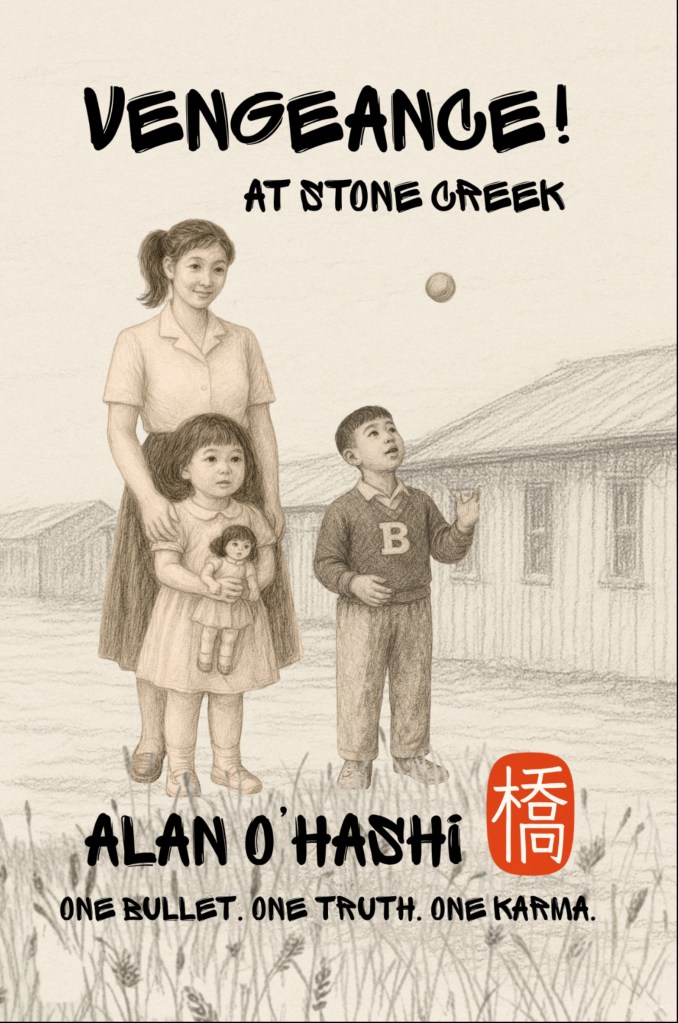
Tak Fujiyama is the son of a Japanese American family whose story stretches from the Japanese American community in San Pedro, California to the wartime incarceration of Japanese Americans during World War II. His family eventually opens a Japanese restaurant in Laramie, but Tak carries a much older wound.

During the war, senseless violence at an incarceration camp leaves a mark that doesn’t disappear when the barbed wire comes down. Tak’s search for justice and revenge forces him to confront what happened to his family and what it means to carry the consequences of injustice across generations.

The novel is part historical fiction, part mystery, and part revenge story, but at its heart it asks a simple question: What happens when an injustice is never made right?

Buy Vengeance at Stone Creek

What the Morning Brings

What the Morning Brings takes the saga into the summer of 1968, when America seems to be coming apart at the seams.
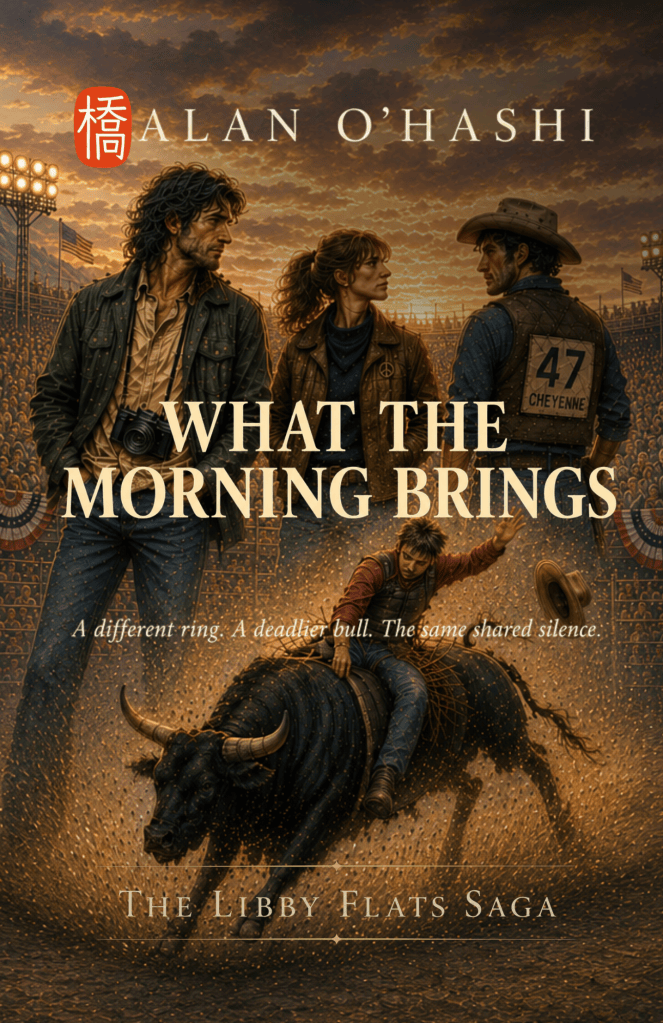
Inspired by Ernest Hemingway’s The Sun Also Rises, the novel reimagines Hemingway’s world of disillusionment and privilege in Boulder during the 1960s Vietnam War, civil rights movement, and social upheaval.

Hemingway’s Jake Barnes finds himself in Boulder, where he encounters a minor character from Vengeance at Stone Creek. The meeting connects Hemingway’s fictional world with my own and turns a familiar literary landscape into something distinctly Western and distinctly American.

The rodeo, Vietnam, Boulder, and Cheyenne replace the cafés and bullfights of post-World War I Europe. Beneath the surface, however, the same questions remain: What do we do after the world we believed in falls apart? Where do we go when we no longer belong to the world that made us?

Buy What the Morning Brings

Three stories. One fictional world.

The three novels move back and forth through time, but they share a common concern: how the past shapes who we become and how much power we have to change what comes next.

The Libby Flats Saga isn’t finished. I’m still discovering connections between the characters, places, and stories. That’s one of the pleasures of creating a fictional world: sometimes the characters know where they’re going before I do.

For now, these three books provide three different doorways into that world.

Welcome to Libby Flats.
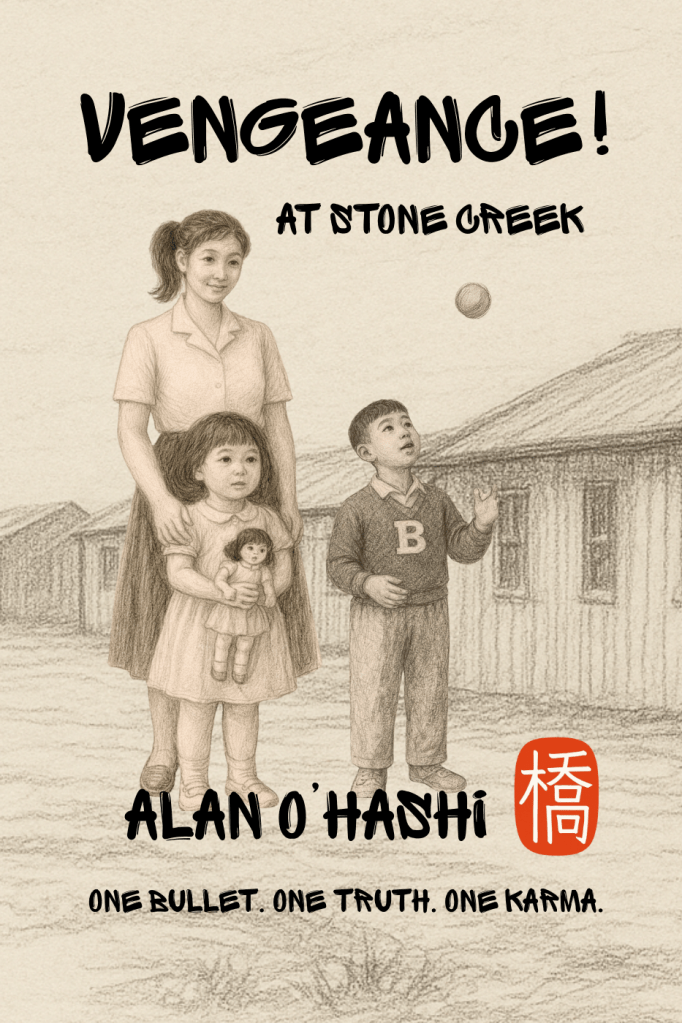
Vengeance! at Stone Creek: The Executive Order That Never Ended

Some novels entertain. Some educate. A rare few refuse to let the reader off the hook.

Vengeance! at Stone Creek is one of those books.

Set in the long shadow of World War II–era Japanese incarceration, the novel explores what happens after injustice has been legalized and filed away.

Rather than retelling history, it integrates unanswered questions and the uncomfortable truth, deferring accountability indefinitely.

Alan O’Hashi writes with restraint and precision. The tension comes from moral pressure and the question history prefers not to ask: What is owed when the harm was sanctioned by law?

When a soldier fires his rifle from a guard tower inside Camp Arroyo, a Japanese American incarceration camp near Stone Creek, Colorado, the sound echoes far beyond the barbed wire. 

What happens next is buried under military procedure, fear, and silence. Official reports flatten the truth. Witnesses are discouraged from speaking. Inside the Camp, grief is expected to be swallowed quietly.

Tak Fujiyama is a child when the shots are fired, but the moment marks him for life. Incarcerated alongside his family without trial, Tak learns early that innocence offers no protection and that the law does not always serve justice.

As the War grinds forward, Camp Arroyo becomes its own harsh world of dust storms, guard towers, loyalty questionnaires, and the daily humiliation of being labeled an enemy by the country of his birth. The violence at Stone Creek is never properly addressed, and Tak is left to grow up carrying an unanswered wound.

After the War ends, America moves on quickly.

The WRA dismantled the camps, archived files, and released families with bus tickets. Tak learns that forgetting is the price of belonging. He builds a life beyond the Camp, but memory proves stubborn. The injustice refuses to fade, shaping his relationships, his sense of self, and his understanding of right and wrong.

Years later, unanswered questions draw Tak back to Stone Creek. His past resurfaces through testimony, suppressed records, and the memories of those who survived the Camp’s violence. Tak confronts what was taken from him and others and reckons with a difficult truth. Vengeance feels like the only remaining form of balance.

Vengeance! at Stone Creek is a powerful work of historical fiction that explores the lasting psychological and moral consequences of wartime incarceration. Through Tak’s journey, the novel examines loyalty under pressure, the burden placed on survivors to remain silent, and the generational cost of unresolved trauma. My story illuminates a rarely told chapter of American history, where citizenship failed to protect and the rule of law bent under fear and prejudice.

At its heart, this is a book about memory, who controls it, who benefits from forgetting, and what happens when those harmed refuse to let the truth disappear. Vengeance! at Stone Creek asks hard questions about accountability and justice, and about what remains when a nation chooses expedience. It is a sobering, deeply human novel about the price of silence and the long shadow cast by injustice.

This novel is for readers who loved Snow Falling on Cedars, No-No Boy, or There There, but it stands firmly on its own. It’s spare, deliberate, and quietly furious. The kind of book that sparks hand-selling conversations. The kind readers come back to talk about.

Vengeance! at Stone Creek dropped February 19th and is available for order from your local bookstore. Buy a signed copy or Buy a copy online.

Vengeance! at Stone Creek: A Novel of Injustice

Some novels entertain. Some educate. A rare few refuse to let the reader off the hook.

Vengeance! at Stone Creek is one of those books.

Set in the long shadow of World War II–era Japanese incarceration, the novel explores what happens after injustice has been legalized and filed away.

Rather than retelling history, it integrates unanswered questions and the uncomfortable truth, deferring accountability indefinitely.

Alan O’Hashi writes with restraint and precision. The tension comes from moral pressure and the question history prefers not to ask: What is owed when the harm was sanctioned by law?

When a soldier fires his rifle from a guard tower inside Camp Arroyo, a Japanese American incarceration camp near Stone Creek, Colorado, the sound echoes far beyond the barbed wire. 

What happens next is buried under military procedure, fear, and silence. Official reports flatten the truth. Witnesses are discouraged from speaking. Inside the Camp, grief is expected to be swallowed quietly.

Tak Fujiyama is a child when the shots are fired, but the moment marks him for life. Incarcerated alongside his family without trial, Tak learns early that innocence offers no protection and that the law does not always serve justice.

As the War grinds forward, Camp Arroyo becomes its own harsh world of dust storms, guard towers, loyalty questionnaires, and the daily humiliation of being labeled an enemy by the country of his birth. The violence at Stone Creek is never properly addressed, and Tak is left to grow up carrying an unanswered wound.

After the War ends, America moves on quickly.

The WRA dismantled the camps, archived files, and released families with bus tickets. Tak learns that forgetting is the price of belonging. He builds a life beyond the Camp, but memory proves stubborn. The injustice refuses to fade, shaping his relationships, his sense of self, and his understanding of right and wrong.

Years later, unanswered questions draw Tak back to Stone Creek. His past resurfaces through testimony, suppressed records, and the memories of those who survived the Camp’s violence. Tak confronts what was taken from him and others and reckons with a difficult truth. Vengeance feels like the only remaining form of balance.

Vengeance! at Stone Creek is a powerful work of historical fiction that explores the lasting psychological and moral consequences of wartime incarceration. Through Tak’s journey, the novel examines loyalty under pressure, the burden placed on survivors to remain silent, and the generational cost of unresolved trauma. My story illuminates a rarely told chapter of American history, where citizenship failed to protect and the rule of law bent under fear and prejudice.

At its heart, this is a book about memory, who controls it, who benefits from forgetting, and what happens when those harmed refuse to let the truth disappear. Vengeance! at Stone Creek asks hard questions about accountability and justice, and about what remains when a nation chooses expedience. It is a sobering, deeply human novel about the price of silence and the long shadow cast by injustice.

This novel is for readers who loved Snow Falling on Cedars, No-No Boy, or There There, but it stands firmly on its own. It’s spare, deliberate, and quietly furious. The kind of book that sparks hand-selling conversations. The kind readers come back to talk about.

Why indie bookstores should carry it:

Because this is exactly the kind of book your customers expect from you. The stories they won’t discover through algorithms or celebrity lists. This story rewards thoughtful readers by inviting dialogue.

Vengeance! at Stone Creek is available this February. Recommend it. Put it in the hands of readers who want comfort and the truth. Order from Ingram iPage, 979-8-9894213-1-2, Retail Price $19.95 USD.

← Back

Thank you for your response. ✨